
SPC, vinyl and laminate can look similar in product photos, but they behave differently after installation. Project buyers should compare structure, water resistance, dimensional stability and expected use before choosing only by price.
SPC Flooring
How to Compare Flooring Quotes Fairly
SPC, vinyl and laminate may look similar in photos, but the quotation should be compared by use case and structure. This is especially important for apartments, hotels and offices.
| Buyer checkpoint | What to confirm before quotation |
|---|---|
| Room type | Wet areas, corridors and hotel rooms need different priorities. |
| Wear layer | Confirm whether the wear layer suits residential, light commercial or heavier traffic. |
| Thickness | Do not compare different thicknesses as if they are the same product. |
| Accessories | Ask for skirting, stair nosing or transition strips if needed. |
Useful next pages: SPC Flooring Flooring Category Contact
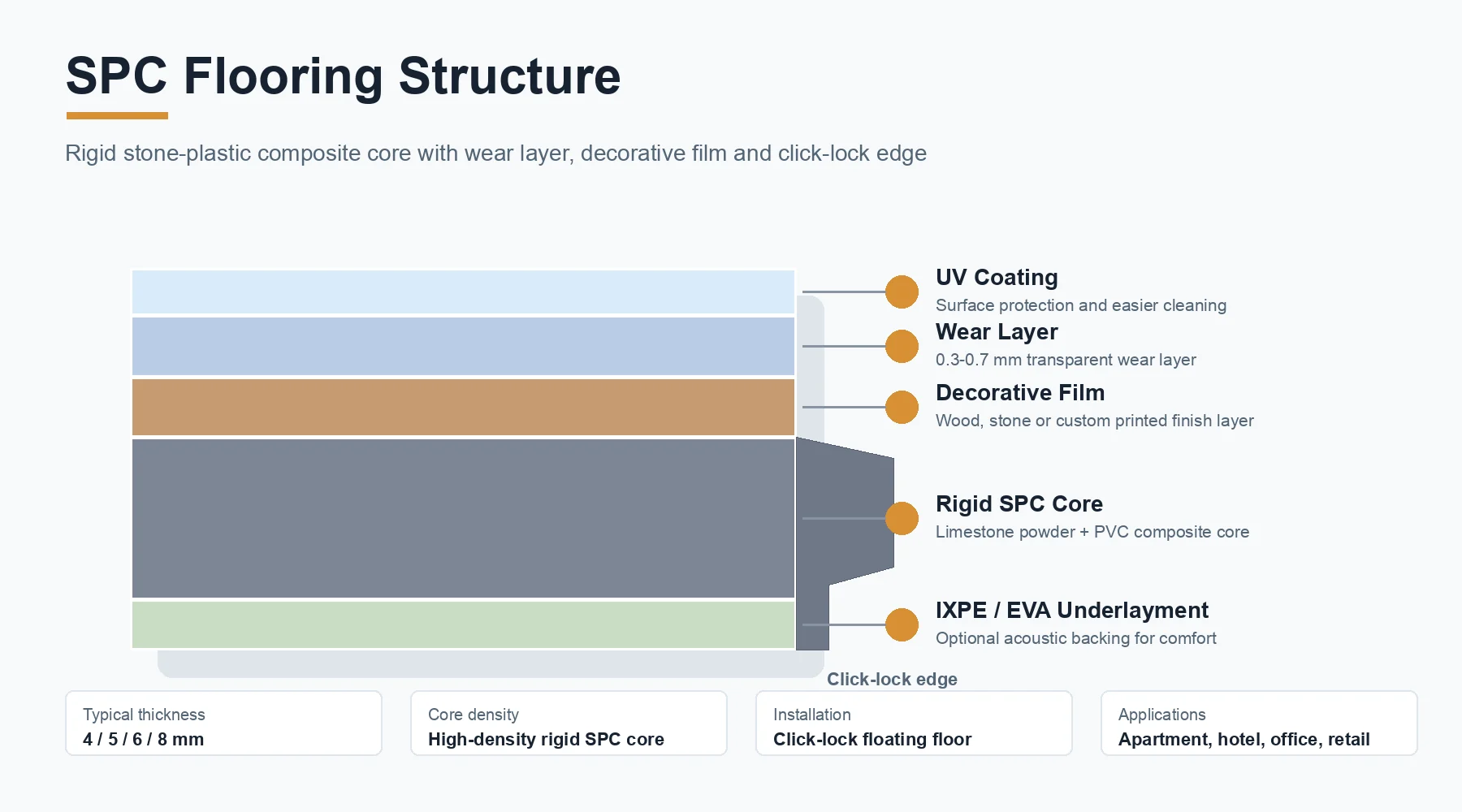
SPC uses a rigid stone-plastic composite core. It is waterproof, stable and suitable for many residential and light commercial spaces. It is often chosen for apartments, hotels and office projects where fast click-lock installation is important.
Vinyl Flooring
Flexible vinyl flooring can be comfortable and economical, but low-grade options may show subfloor imperfections more easily. Luxury vinyl products can perform well, but the buyer should compare wear layer, backing and installation method.
Laminate Flooring
Laminate flooring often has a wood-based core. It can look attractive and feel warm, but ordinary laminate is more sensitive to water. For kitchens, humid areas or rental apartments, this is a major consideration.
Quick Comparison
| Water resistance | SPC and vinyl are stronger; laminate varies by grade |
| Stability | SPC rigid core performs well under normal indoor conditions |
| Comfort | Backing material affects sound and foot feel |
| Best use | SPC for waterproof project flooring; laminate for dry residential interiors |
What to Send for a Quotation
For project-based supply, the most useful inquiry information is product type, size or drawing, finish requirement, quantity, destination port and any reference photos. This helps us check the suitable material structure before quoting.
How to Choose Between the Three
If the project is a dry bedroom with a limited budget, laminate may still be acceptable. If waterproof performance and faster project installation are important, SPC often becomes the safer choice. Flexible vinyl can work well, but the buyer must check grade and backing carefully.
Decision Table
| Apartment renovation | SPC is often practical because of waterproof and click-lock installation |
| Dry residential room | Laminate can be economical if water risk is low |
| Commercial interior | SPC with stronger wear layer is usually safer |
| Uneven subfloor | Preparation is needed before any click-lock floor |
Total Cost Is More Than Material Price
Installation speed, subfloor work, wastage, accessories and future repair should all be counted. A cheap floor with weak click-lock can become expensive if panels separate after installation.
FAQ
Is SPC better than laminate?
For waterproof performance, SPC is usually better. For dry rooms where warmth and budget matter, laminate may still be considered.
Is SPC the same as vinyl?
SPC is a type of rigid vinyl flooring with a stone-plastic composite core, so it behaves differently from softer vinyl products.
Practical Sourcing Takeaway
When comparing flooring types, do not only compare sample boards on a table. Think about the room condition after installation: water risk, cleaning frequency, rolling chairs, sunlight exposure, acoustic comfort and repair method. SPC is often a strong choice because it solves several practical problems at once, but the exact specification still matters. Wear layer, backing and click-lock quality should be checked before confirming a container order.
For project buyers, the safest approach is to request samples of all three flooring types and test them in the actual lighting condition. Surface gloss, foot sound and color warmth can feel different from catalog photos. This makes the final decision more reliable for owners and designers.