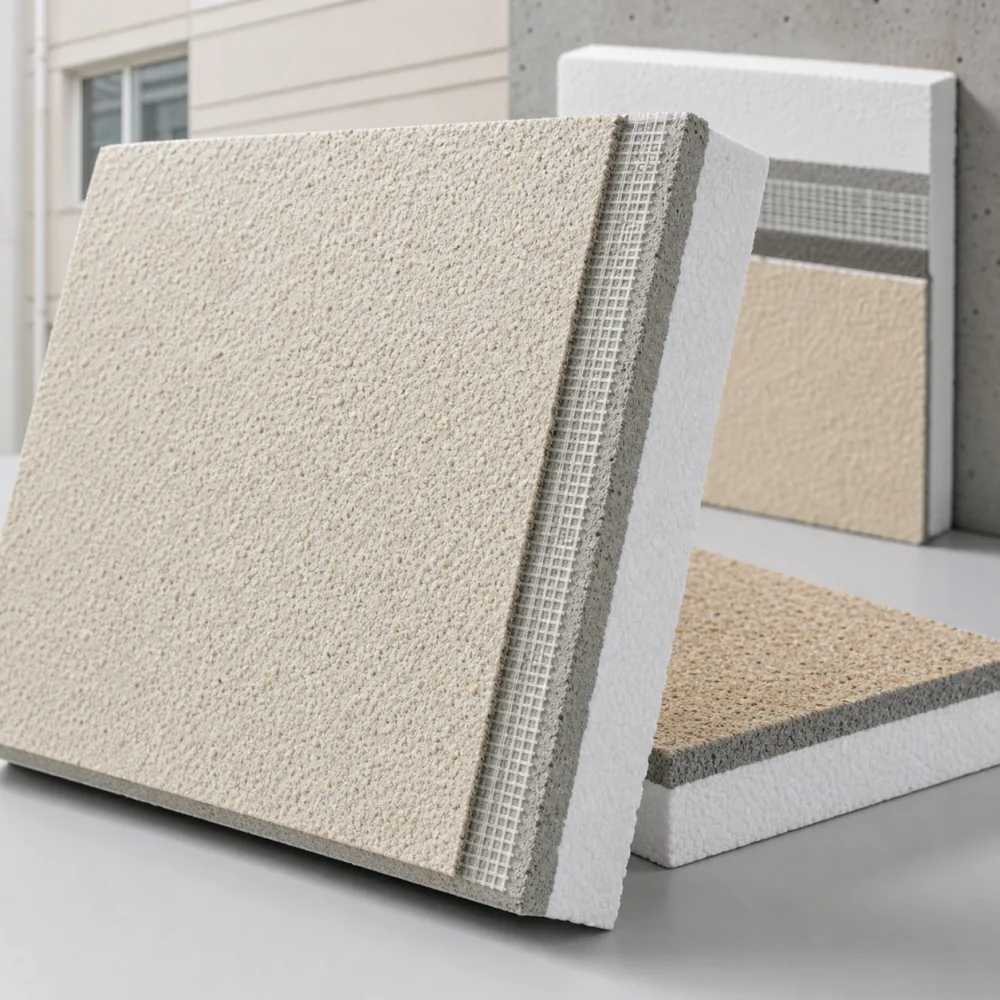
ETICS insulation decorative panels combine thermal insulation and exterior finish in one factory-made panel. For project buyers, the value is not only energy saving; it is also faster installation, cleaner site work and more predictable facade appearance.
What the Panel Includes
Project Questions Before Choosing ETICS Panels
Insulation decorative panels should be chosen around climate, wall condition, fire requirement and installation method. These details affect both quotation and long-term performance.
| Buyer checkpoint | What to confirm before quotation |
|---|---|
| Base wall | New concrete, old renovation walls and steel structures need different checks. |
| Insulation core | Confirm insulation type and required thickness. |
| Surface finish | Stone-look, metal-look or coating finish affects appearance and maintenance. |
| Fixing method | Ask whether adhesive, anchors or combined fixing are recommended. |
Useful next pages: ETICS Panel Projects Contact
A typical panel uses an insulation core such as EPS, XPS or rock wool, with a decorative surface layer that can imitate stone, marble or coating texture. The system should be selected according to fire requirement, climate and wall substrate.
Advantages Compared with Traditional Wet Systems
- Factory-controlled surface finish.
- Reduced wet work on site.
- Insulation and decoration installed together.
- More stable appearance across large facade areas.
Where It Is Used
These panels are common in residential buildings, schools, hospitals, office buildings and renovation projects where energy efficiency matters. For high-rise or strict fire-rated projects, the core material and fixing system must be confirmed carefully.
Procurement Notes
| Core material | EPS, XPS, rock wool or other specified insulation core |
| Surface | Stone-look, marble-look, coating texture or custom color |
| Fire requirement | Confirm local code and core material rating |
| Installation | Check adhesive, anchors and substrate condition |
What to Send for a Quotation
For project-based supply, the most useful inquiry information is product type, size or drawing, finish requirement, quantity, destination port and any reference photos. This helps us check the suitable material structure before quoting.
Why ETICS Panels Need System Thinking
An insulation decorative panel is not only a board. It works with adhesive, anchors, wall substrate, joint treatment and edge details. If one part of the system is wrong, the final facade can have cracking, water ingress or uneven appearance.
Before You Request a Quote
| Building type | New building or renovation project |
| Core material | EPS, XPS, rock wool or specified insulation material |
| Finish | Stone texture, marble effect, coating or custom color |
| Fire requirement | Local code and building height requirements |
Where These Panels Make Sense
They are useful where energy saving and facade renovation are both required. They are less suitable when the wall substrate is unstable or when local code requires a different fire-rated system. Always confirm installation details before ordering.
FAQ
Can ETICS decorative panels be used for renovation?
Yes, they are often used for renovation, but the existing wall condition must be checked first.
Is rock wool better than EPS?
Rock wool usually offers better fire performance, while EPS can be more economical. The right choice depends on code and budget.
Practical Sourcing Takeaway
The best ETICS panel project starts with wall condition and code requirements, not only with panel appearance. Buyers should confirm substrate strength, fire requirement, insulation target, fixing method and joint treatment before comparing prices. A panel with a beautiful surface will still fail if the adhesive, anchor or edge detail is wrong. For renovation work, photos and measurements of the existing wall are especially useful because they help the supplier judge whether the proposed system is realistic.
For buyers preparing a real project, it is also useful to collect wall photos, elevation drawings, insulation targets and local fire requirements before asking for price. This lets the supplier avoid guessing the system. A clear inquiry reduces back-and-forth messages and makes the first quotation closer to the final project cost.