
SPC flooring is popular because it gives project buyers a practical balance: waterproof performance, click-lock installation, stable dimensions and wood-look finishes at a controlled cost. But it is not a magic product for every project. The right decision depends on traffic level, subfloor condition, acoustic requirement and expected service life.
What SPC Flooring Is Made Of
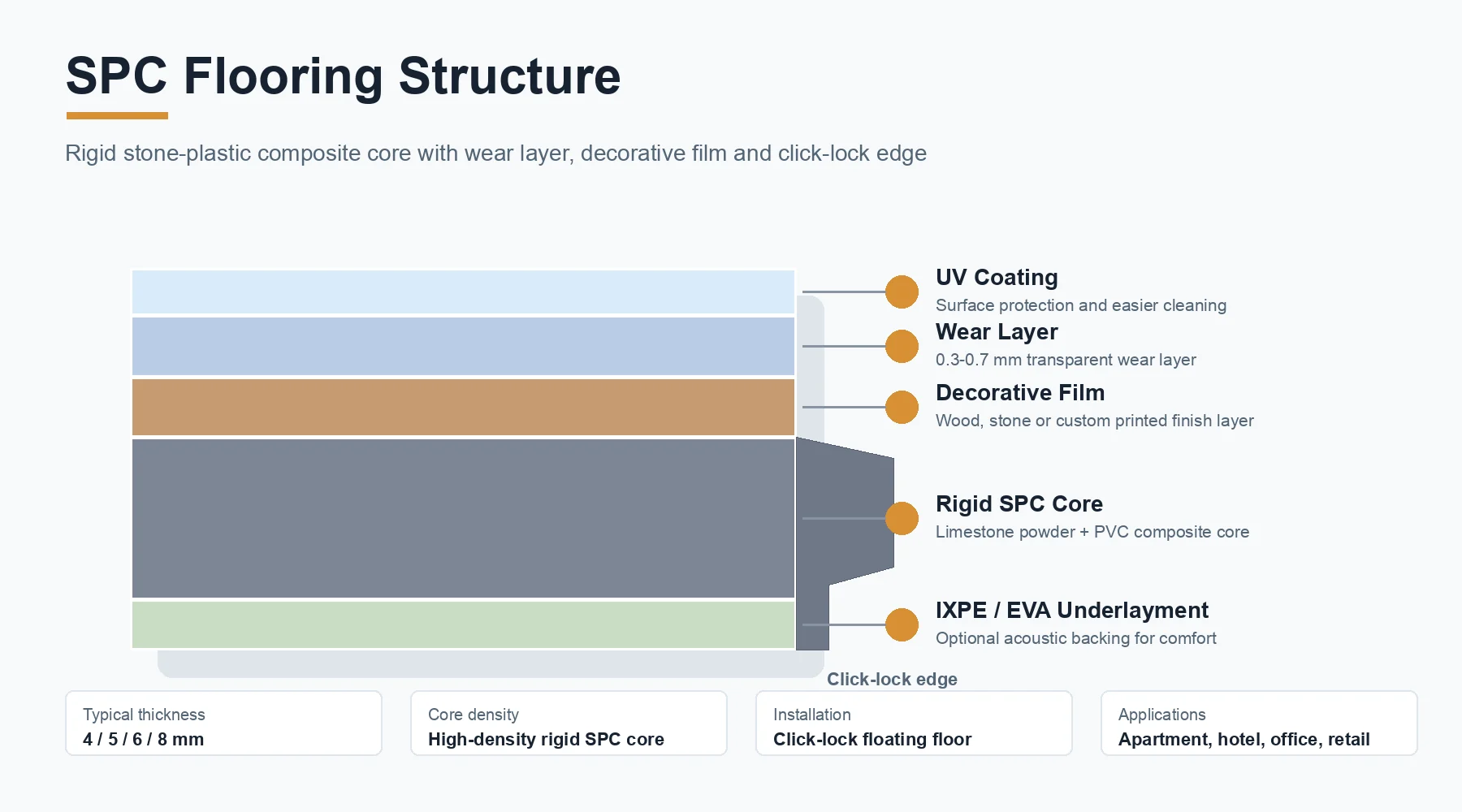
When SPC Flooring Is a Good First Import Product
SPC flooring can be a practical starting product for small B buyers because samples, colors and quantities are easier to discuss than many custom facade materials. The key is to control specification choices.
| Buyer checkpoint | What to confirm before quotation |
|---|---|
| First order | Start with fewer colors and common thicknesses to reduce stock risk. |
| Target buyer | Apartments, rentals, small hotels and offices usually care about cost and speed. |
| Quality check | Confirm click strength, wear layer and dimensional stability. |
| Documents | Ask for packing list, carton information and loading quantity before payment. |
Useful next pages: SPC Flooring SPC Flooring Guides Contact
SPC means stone-plastic composite. A typical plank includes UV coating, wear layer, decorative film, rigid SPC core and optional IXPE or EVA backing. The rigid core is what gives SPC flooring better dimensional stability than many soft vinyl products.
Main Advantages
- Waterproof surface: suitable for kitchens, apartments, hotels and many commercial interiors.
- Stable rigid core: less expansion and contraction compared with some flexible vinyl flooring.
- Fast installation: click-lock systems reduce wet work and shorten renovation time.
- Finish variety: wood, stone and neutral commercial colors are easy to match.
Limitations Buyers Should Not Ignore
SPC is rigid, so a very uneven subfloor can still cause hollow sound or locking problems. The wear layer matters for traffic resistance; a low-cost plank with a thin wear layer is not the same product as a commercial-grade plank. Acoustic comfort also depends on backing material and installation details.
Where SPC Flooring Is a Good Fit
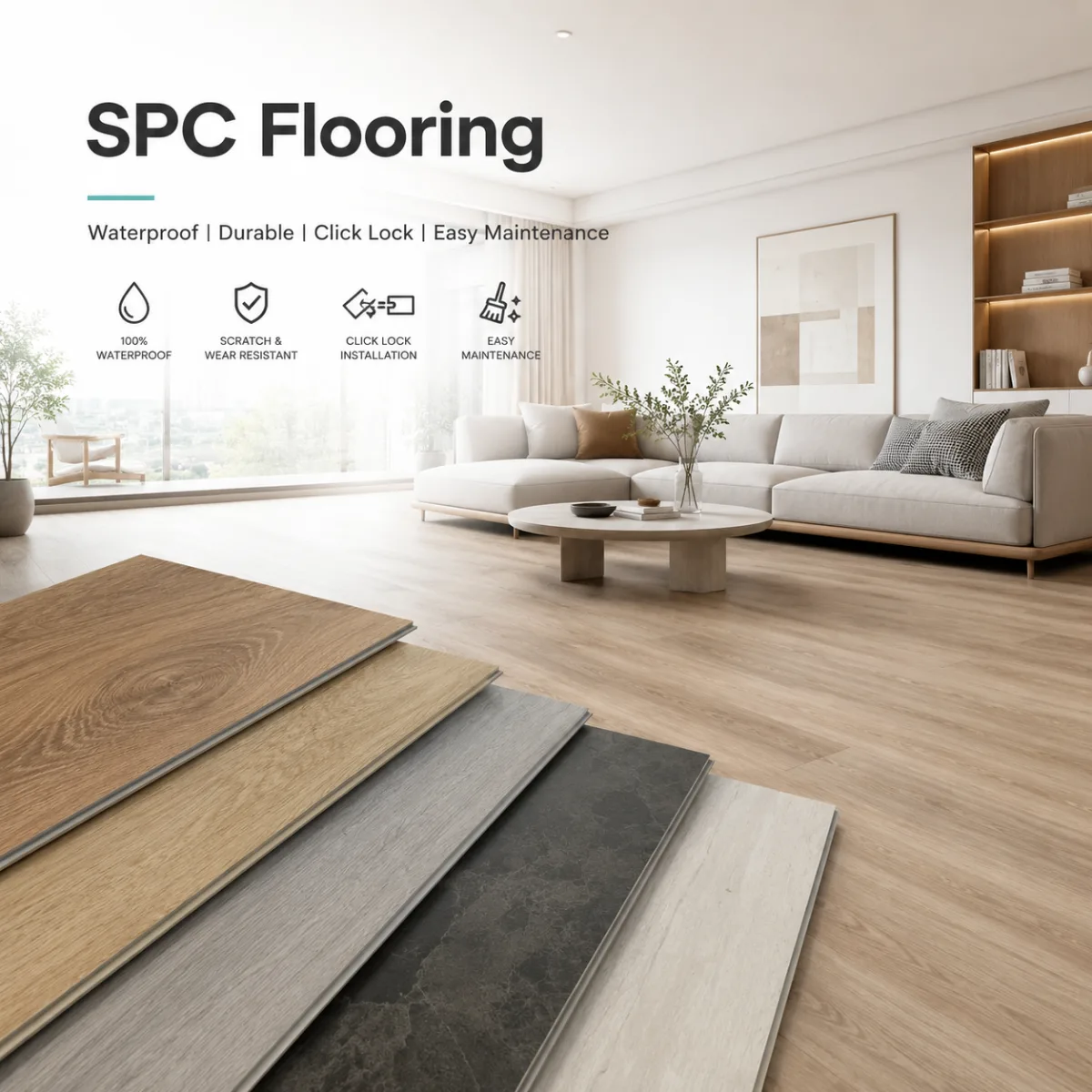
SPC works well in apartments, hotels, offices, retail stores and light commercial spaces. For heavy industrial use, wet outdoor areas or spaces with extreme heat exposure, the specification should be reviewed carefully before purchase.
Buying Checklist
| Wear layer | 0.3 mm for residential/light use, 0.5 mm or above for heavier traffic |
| Thickness | Common project options include 4 mm, 5 mm, 6 mm and 8 mm |
| Backing | IXPE/EVA backing improves comfort and sound reduction |
| Installation | Check subfloor flatness before click-lock installation |
What to Send for a Quotation
For project-based supply, the most useful inquiry information is product type, size or drawing, finish requirement, quantity, destination port and any reference photos. This helps us check the suitable material structure before quoting.
How to Judge SPC Flooring Quality
Two SPC floors can look similar in a product photo but behave differently after installation. Wear layer thickness, core density, click-lock precision, backing quality and carton packing all affect the final result. For project orders, ask for samples from the actual production finish, not only a digital catalog image.
Project Buyer Checklist
| Wear layer | 0.3 mm for residential/light traffic; 0.5 mm or above for commercial traffic |
| Click system | Check locking strength and installation tolerance |
| Backing | IXPE or EVA backing can improve acoustic comfort |
| Packing | Confirm pieces per carton, pallet method and container loading plan |
When SPC Flooring Is Not the Best Option
SPC is not ideal if the subfloor is very uneven, if the project needs outdoor exposure, or if the owner expects the warm feel of real wood. It is also important to avoid very cheap planks with poor locking systems because repair after installation is expensive.
FAQ
Is SPC flooring suitable for hotels?
Yes, it is commonly used in hotel rooms and apartments, especially when waterproof performance and fast installation are important.
Does thicker SPC always mean better quality?
Not always. Thickness matters, but wear layer, core quality and click-lock precision are also important.