
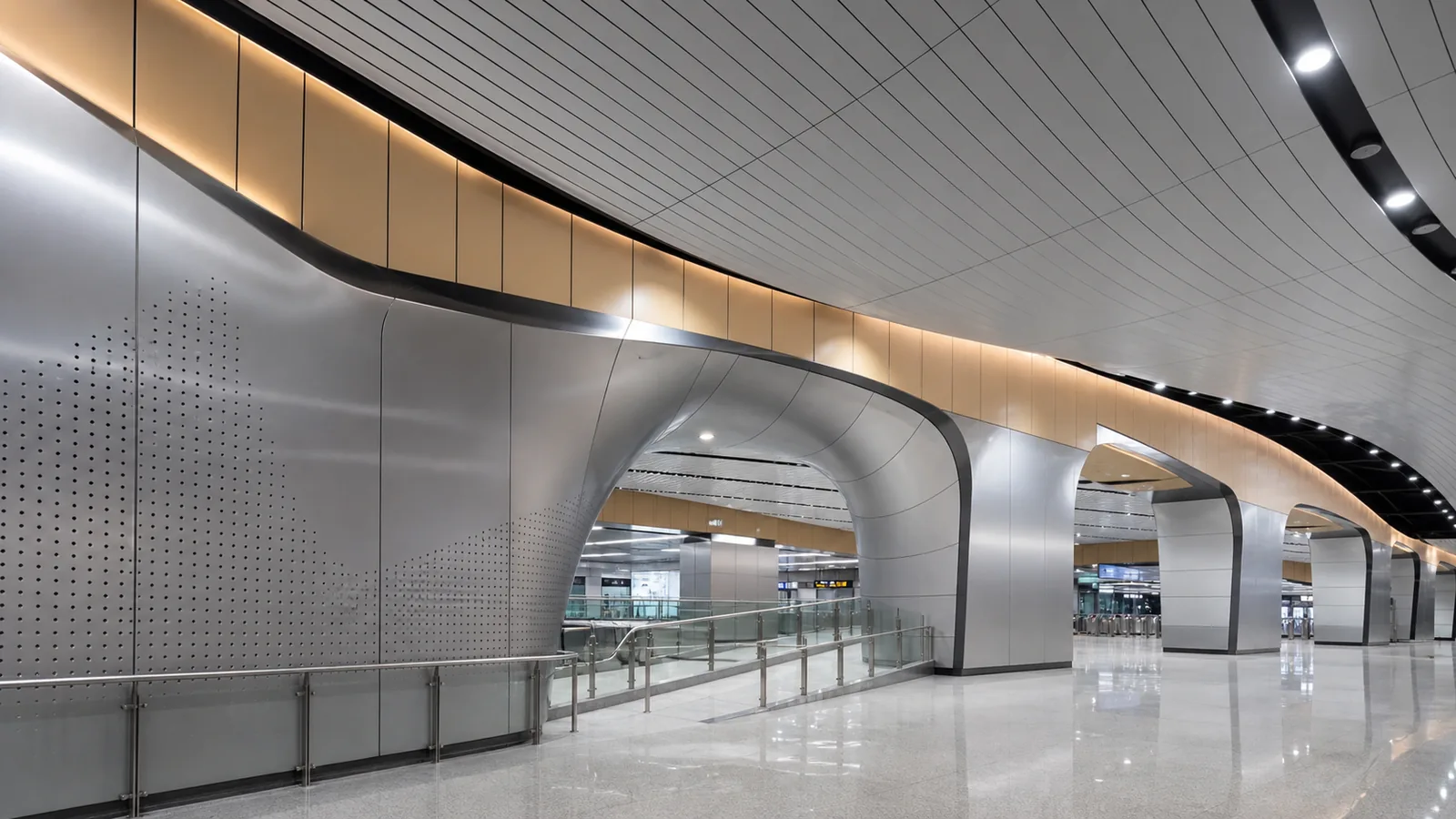
In many new subway stations, the visible ceiling and wall surfaces are no longer dominated by heavy stone or ceramic tile. Aluminum panels have become a practical choice because transit projects need clean appearance, controlled fire performance, fast maintenance and repeatable installation across many stations.
Public Transport Projects Care About Maintenance
How to Turn This Trend into a Quotation Request
This article is useful when a contractor or importer is comparing stone, tile and aluminum panels for a public interior. To move from idea to quotation, translate the design concept into measurable panel details.
| Buyer checkpoint | What to confirm before quotation |
|---|---|
| Application area | Ceiling, column, wall and curved zones may need different panel structures. |
| Panel drawing | Send radius, perforation pattern, joint width and installation method if available. |
| Fire and maintenance | Public transport interiors often care about fire performance and cleaning. |
| Mock-up need | For visible public projects, ask whether a sample or mock-up panel is needed. |
Useful next pages: Aluminum Solid Panel Aluminum Honeycomb Panel Projects
A subway station is not a normal retail interior. It has high traffic, strict fire and smoke requirements, constant cleaning and future repair work. If a ceiling or wall section needs access, aluminum panels are easier to remove and replace than many wet-installed materials.
Why Aluminum Works Better Than Tile in Many Areas
Tiles are hard and familiar, but they rely heavily on site workmanship. Hollowing, cracking, joint pollution and replacement work can become long-term problems. Aluminum panels are prefabricated, so the visible result is less dependent on wet work at the site.
Typical Subway Applications
- Ceiling panels in platforms, corridors and concourses.
- Column cladding and wall cladding.
- Soffit panels around entrances and transfer areas.
- Perforated panels where ventilation or acoustic control is needed.
How Buyers Should Specify the Panels
The inquiry should not only say “aluminum panel”. It should include thickness, panel size, surface finish, fire requirements, installation method, access panel requirements and drawing details. For public transport projects, installation consistency is often as important as material price.
What to Send for a Quotation
For project-based supply, the most useful inquiry information is product type, size or drawing, finish requirement, quantity, destination port and any reference photos. This helps us check the suitable material structure before quoting.
Why Transport Projects Prefer Repeatable Systems
A subway project may involve many stations with similar design language. A repeatable panel system helps contractors keep the same joint width, access panel logic and finish quality across different locations. This is difficult when every visible surface depends heavily on wet work at site.
Material Selection Checklist
| Ceiling areas | Flat or perforated aluminum ceiling panels with access requirements |
| Wall areas | Solid aluminum panels or honeycomb panels depending on size and flatness |
| Fire and smoke | Confirm local transport authority requirements |
| Maintenance | Panel numbering, removable sections and spare panels |
What Importers Should Ask Before Ordering
Ask for shop drawing support, panel numbering method, packing by station or zone, finish sample approval and protection film details. For a station project, unclear labeling can cause more problems than the panel price itself.
FAQ
Are aluminum panels used only for ceilings?
No. They are used for ceilings, walls, columns, soffits, entrance canopies and equipment access areas.
Can perforated panels be used in subway stations?
Yes, perforated panels are often used where ventilation, acoustic absorption or a lighter visual effect is required.
Practical Sourcing Takeaway
For sourcing teams, subway and public transport projects should be treated as system projects rather than simple panel purchases. The buyer should compare panel material, subframe method, access requirements, fire requirements, packing labels and long-term replacement logic together. A clean station interior depends on repeated details: joint width, color consistency, removable panels and protection during installation. If these details are confirmed before production, aluminum panels can reduce site uncertainty and help contractors keep a consistent finish across multiple stations.