
SPC flooring is a rigid core waterproof flooring material widely used in apartments, hotels, offices, shops, rental housing, and renovation projects.
For overseas contractors, distributors, and project buyers, choosing the right SPC flooring thickness is important. The wrong thickness, wear layer, underlayment, or locking system can cause installation problems, customer complaints, and unfair price comparison between suppliers.
This guide explains how to choose SPC flooring thickness, wear layer, underlayment, and basic specifications for different project types.
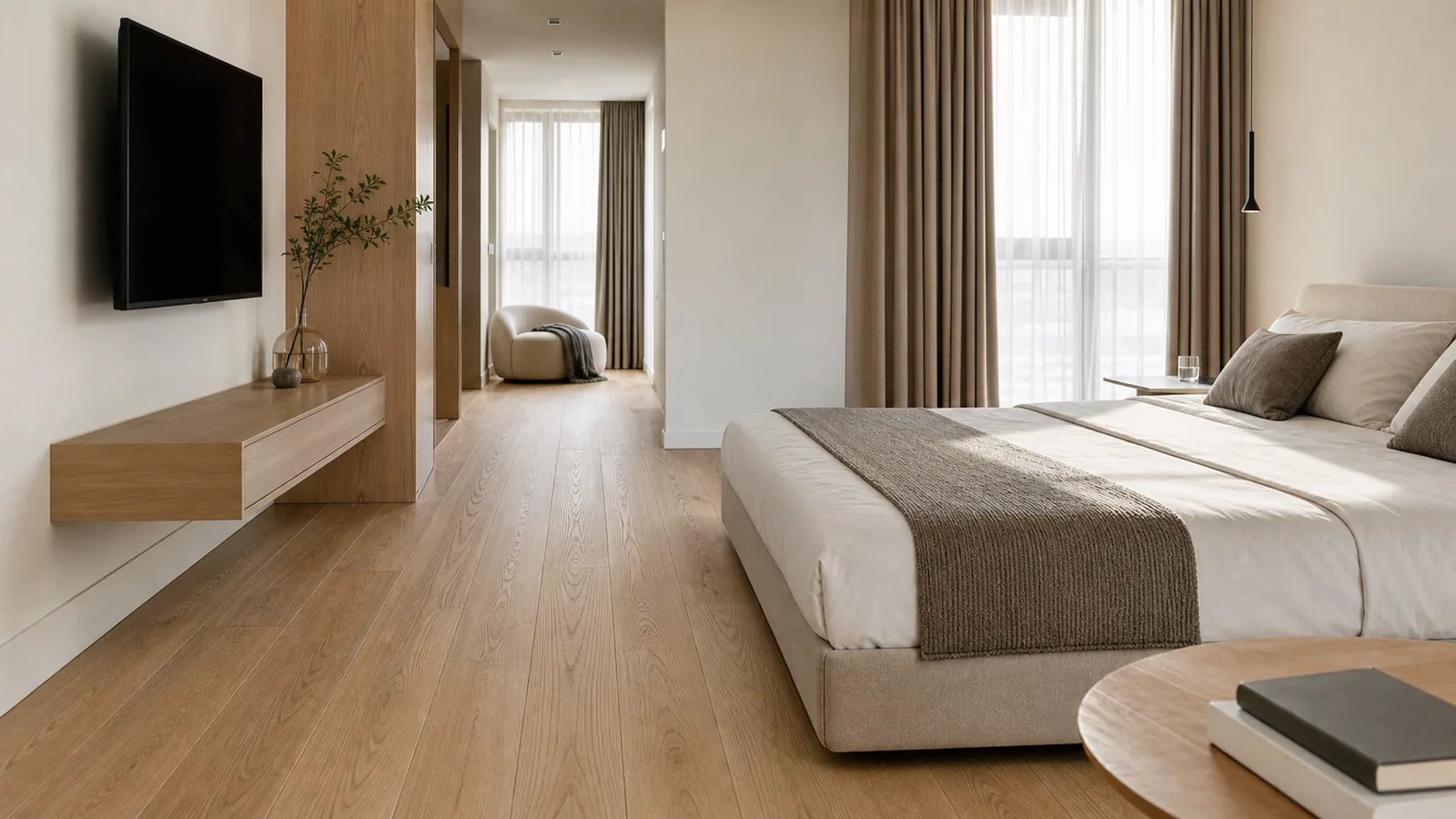
Quick Buyer Summary
| Item | Recommendation |
|---|---|
| Best for | Apartments, hotels, offices, shops, rental housing, renovation projects |
| Main advantage | Waterproof rigid core, fast installation, stable floor finish |
| Common thickness | 4mm / 5mm / 6mm / custom thickness depending on supplier |
| Wear layer | Commonly 0.3mm / 0.5mm / 0.7mm depending on traffic level |
| Underlayment | Optional IXPE / EVA / cork backing |
| Installation | Click-lock floating installation |
| Buyer should confirm | Thickness, wear layer, core density, underlayment, locking system, color, packing |
What Is SPC Flooring?
SPC flooring means Stone Plastic Composite flooring.
It is a rigid core flooring product made from stone powder, PVC resin, stabilizers, and surface decorative layers. Compared with traditional vinyl flooring, SPC flooring has a stronger rigid core and better dimensional stability.
SPC flooring is commonly selected for projects that need:
- Waterproof flooring
- Fast installation
- Wood-look or stone-look surface
- Stable performance in renovation projects
- Lower maintenance than natural wood
- Click-lock installation system
SPC flooring is not natural wood and not ceramic tile. It is an engineered rigid flooring system for interior use.
SPC Flooring Structure and Material Composition
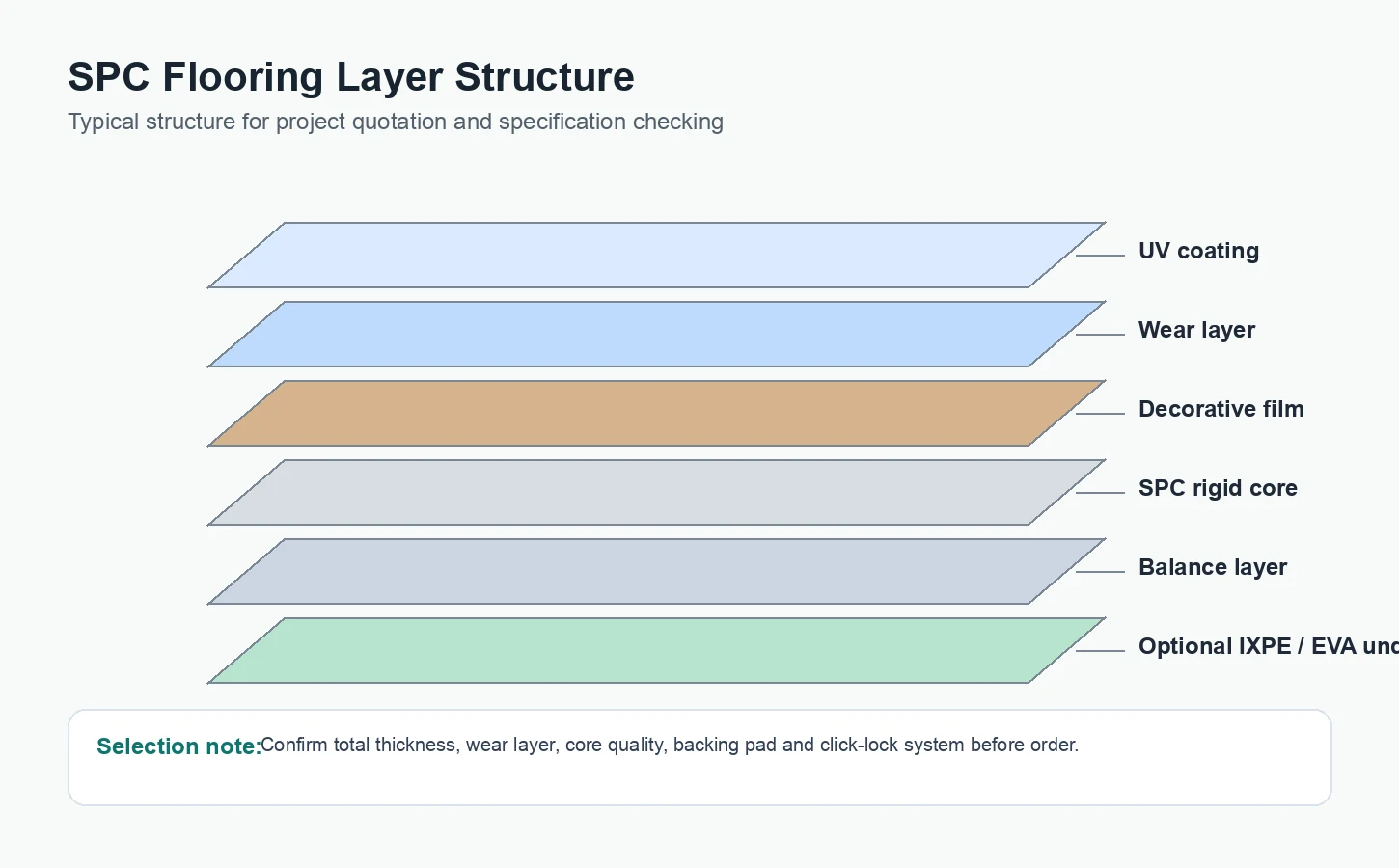
A typical SPC flooring plank includes the following layers:
| Layer | Function |
|---|---|
| UV coating | Protects the surface and improves cleaning performance |
| Wear layer | Resists daily walking wear, scratches, and abrasion |
| Decorative film | Provides wood, stone, marble, or modern surface appearance |
| SPC rigid core | Provides waterproof rigid body and dimensional stability |
| Balance layer | Helps improve plank stability |
| Optional underlayment | IXPE, EVA, or cork backing improves sound comfort and installation feel |
The SPC rigid core is the key difference between SPC flooring and many flexible vinyl flooring products.
Why Thickness Matters
SPC flooring thickness affects installation feel, locking strength, floor stability, acoustic comfort, and project positioning.
However, thicker flooring is not always automatically better.
Buyers should consider:
- Project traffic level
- Subfloor flatness
- Locking system quality
- Wear layer thickness
- Underlayment requirement
- Budget
- Packing and shipping cost
A 5mm SPC floor with a good locking system and correct wear layer may perform better than a thicker low-grade plank.
Common SPC Flooring Thickness Options
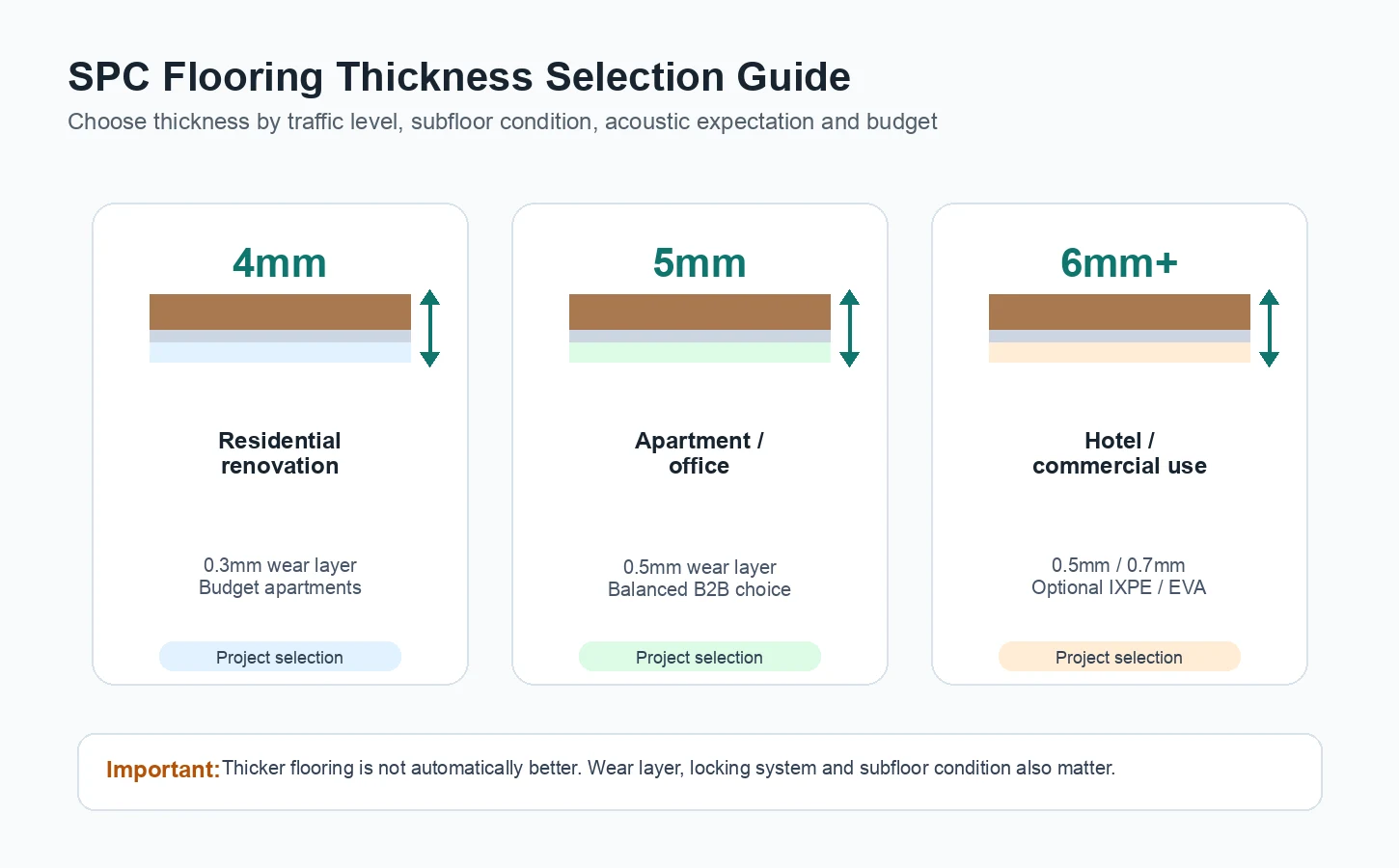
| Thickness | Typical Use | Buyer Notes |
|---|---|---|
| 4mm | Residential renovation, rental units, budget apartment projects | Cost-effective, but subfloor flatness is important |
| 5mm | Apartments, offices, standard commercial interiors | Balanced choice for many small B projects |
| 6mm | Hotels, shops, higher-use interiors | Better feel and stronger project positioning |
| 6.5mm / 7mm / custom | Commercial or upgraded flooring systems | Often combined with thicker wear layer or underlayment |
Final performance depends not only on total thickness, but also on SPC core quality, wear layer, locking system, underlayment, and installation condition.
Wear Layer Selection
The wear layer is one of the most important specifications for SPC flooring.
It affects surface durability and project suitability.
| Wear Layer | Typical Use | Recommendation |
|---|---|---|
| 0.3mm | Residential rooms, low-traffic apartments | Suitable for budget residential projects |
| 0.5mm | Apartments, offices, hotel rooms, normal commercial use | Balanced choice for many B2B projects |
| 0.7mm | Shops, corridors, higher-traffic commercial interiors | Better for heavier commercial use |
Do not compare SPC flooring price only by total thickness. Two floors with the same thickness but different wear layers are not the same product.
Underlayment Options: IXPE, EVA or No Pad
Some SPC flooring products are supplied with attached underlayment.
Common backing options include:
- IXPE pad
- EVA pad
- Cork backing
- No attached pad
| Option | Typical Use | Buyer Notes |
|---|---|---|
| No pad | Budget projects or separate underlayment installation | Lower material cost |
| IXPE pad | Apartments, hotels, offices | Improves sound comfort and installation feel |
| EVA pad | Cost-effective backing option | Common in budget and mid-range projects |
| Cork backing | Upgraded flooring system | Higher cost, better natural feel |
Underlayment can improve walking comfort and reduce noise, but it should match the locking system and project requirement.
Key Engineering Properties
| Property | Typical Value / Description |
|---|---|
| Core type | Stone plastic composite rigid core |
| Common density | Around 1.9–2.1 g/cm³ depending on formula |
| Water resistance | Waterproof core for normal interior flooring use |
| Surface hardness | Depends on UV coating and wear layer |
| Wear resistance | Depends on wear layer and test method |
| Fire performance | Project must confirm test report if required |
| Slip resistance | Surface texture and test standard should be confirmed |
| Installation | Click-lock floating system |
| Application | Apartments, hotels, offices, shops, renovation interiors |
Density, wear resistance, fire rating, formaldehyde level, slip resistance, and acoustic performance must be confirmed with supplier technical data and test reports if required by the project.
Application Scenarios
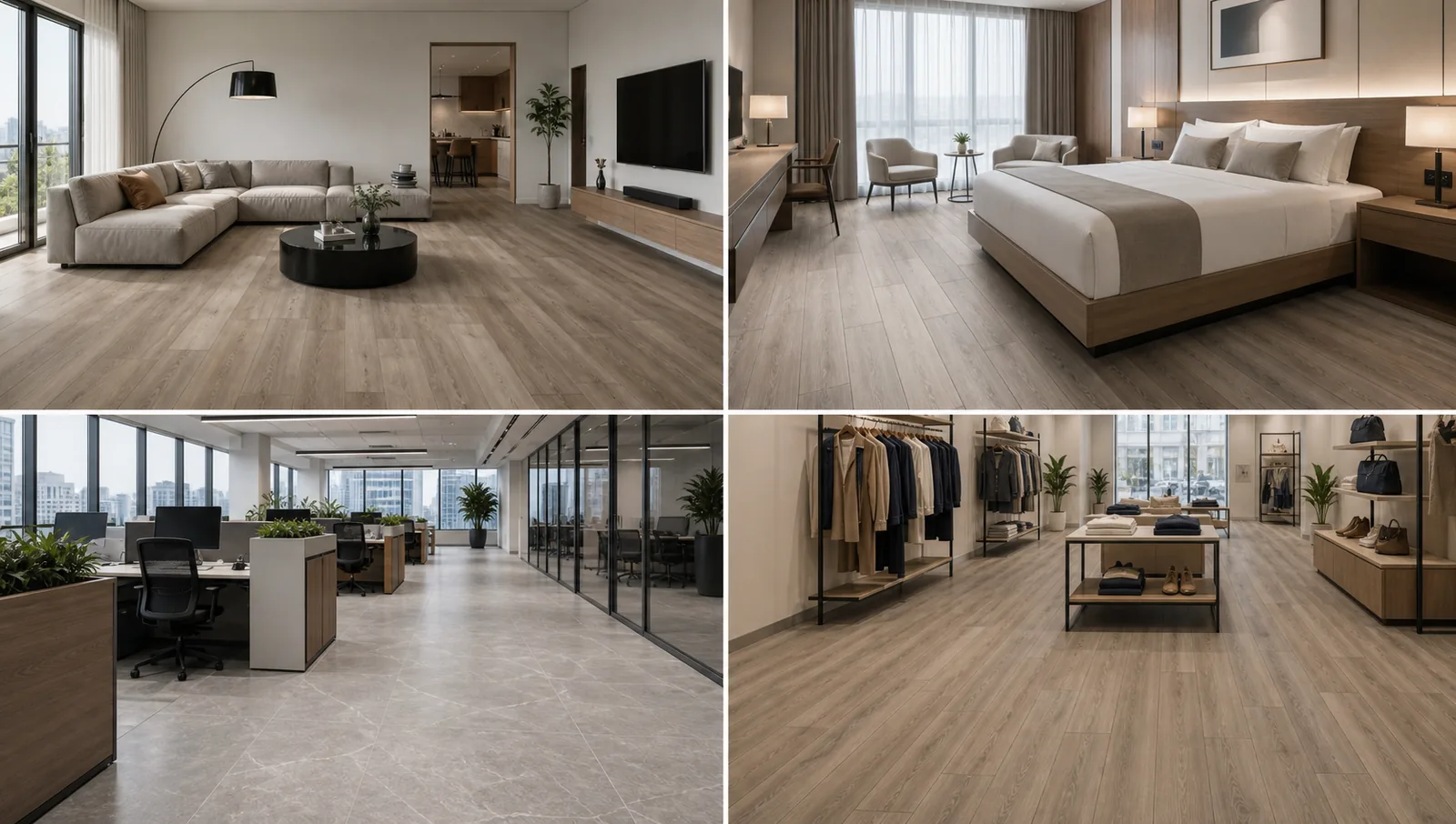
| Project Type | Recommended Thickness | Wear Layer Recommendation |
|---|---|---|
| Rental apartment | 4mm / 5mm | 0.3mm / 0.5mm |
| Standard apartment | 5mm | 0.5mm |
| Hotel room | 5mm / 6mm | 0.5mm |
| Office interior | 5mm / 6mm | 0.5mm |
| Retail shop | 6mm or upgraded system | 0.5mm / 0.7mm |
| Corridor | 6mm or upgraded system | 0.7mm if traffic is high |
| Basement renovation | 5mm / 6mm | 0.5mm |
| Low-budget project | 4mm | 0.3mm |
Choose thickness according to traffic level, customer expectation, subfloor condition, and budget.
Installation System and Project Details
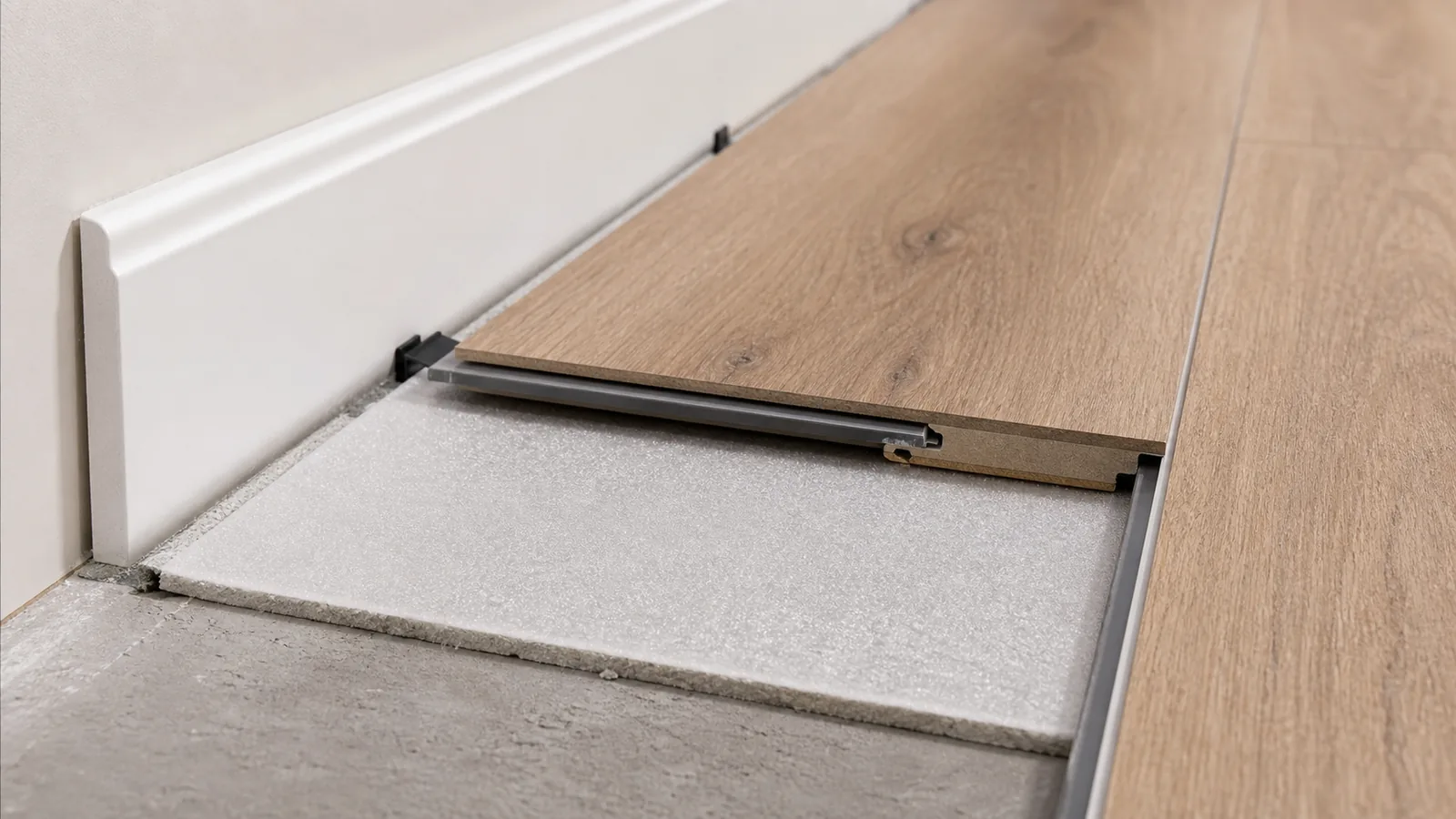
SPC flooring is usually installed with a click-lock floating system.
1. Subfloor Preparation
Key points:
- Subfloor should be clean, dry, and stable
- Uneven floor may affect locking performance
- Large bumps or holes should be repaired before installation
- Moisture condition should be checked before installation
2. Click-Lock Installation
Key points:
- Locking profile must be compatible and stable
- Planks should be installed according to flooring direction plan
- Avoid damaging the locking edge during installation
- A poor locking system may cause gaps or noise after use
3. Expansion Gap and Edge Finishing
Key points:
- Expansion space should be left near walls and fixed objects
- Skirting or baseboard should cover edge gaps
- Door transitions and floor trims should be planned before order
- Large rooms may need additional movement joint planning
Common Project Risks
Many SPC flooring problems come from wrong specification comparison or poor installation.
Common risks include:
- Buyer compares price without comparing wear layer
- Supplier quotes different core density or backing type
- Locking system quality is not checked
- Subfloor is uneven before installation
- Expansion gap is ignored
- Color is confirmed only by photos instead of physical samples
- Different production batches cause slight color difference
- Underlayment is not compatible with the flooring system
- Fire rating or slip resistance is not confirmed for public projects
- Packing is not strong enough for export shipment
For export orders, buyers should confirm samples, thickness, wear layer, core density, locking system, backing pad, color, packing, and test reports if required.
How to Choose SPC Flooring for Different Projects
| Buyer Requirement | Recommended Choice |
|---|---|
| Lowest cost residential project | 4mm with 0.3mm wear layer |
| Standard apartment project | 5mm with 0.5mm wear layer |
| Hotel room project | 5mm or 6mm with 0.5mm wear layer |
| Office project | 5mm / 6mm with 0.5mm wear layer |
| Retail shop | 6mm or upgraded system with 0.5mm / 0.7mm wear layer |
| Higher sound comfort | SPC flooring with IXPE or EVA backing |
| Basement renovation | Waterproof SPC flooring with stable click-lock |
| High-traffic corridor | Confirm 0.7mm wear layer and stronger specification |
The correct selection depends on project traffic, floor condition, acoustic expectation, budget, and installation standard.
SPC Flooring vs Other Flooring Materials
| Material | Best Use | Main Advantage |
|---|---|---|
| SPC Flooring | Apartments, hotels, shops, renovation projects | Waterproof rigid core and fast installation |
| LVT Flooring | Flexible vinyl flooring projects | Softer and flexible structure |
| Laminate Flooring | Dry residential interiors | Wood-look surface with lower material cost |
| Ceramic Tile | Wet areas and heavy-duty floors | Hard surface and strong water resistance |
| Natural Wood Flooring | High-end residential interiors | Natural wood appearance and texture |
SPC flooring is often selected when buyers need waterproof performance, wood-look design, fast installation, and stable renovation results.
It is not always the best choice for every floor. For extremely heavy-duty industrial floors or outdoor areas, other flooring systems may be required. If the same project includes outdoor floor or wall materials, compare WPC Decking and Wall Panels separately.
What Buyers Should Confirm Before Quotation
Before requesting a quotation, please prepare the following information:
- Project type: apartment, hotel, office, shop, rental housing, etc.
- Total flooring area in square meters
- Required thickness
- Wear layer: 0.3mm / 0.5mm / 0.7mm or other
- Surface design: wood, stone, marble, solid color
- Plank size
- Underlayment: IXPE, EVA, cork, or no pad
- Locking system requirement
- Fire rating or slip resistance requirement if needed
- Packing requirement
- Destination country and port
- Sample requirement before bulk order
Clear information helps suppliers quote accurately and prevents misunderstanding between different SPC flooring grades.
FAQ
What thickness of SPC flooring is best?
There is no single best thickness. 4mm is often used for budget residential projects, 5mm is common for apartments and offices, and 6mm or thicker systems are often used for hotels and higher-use commercial spaces.
Is thicker SPC flooring always better?
Not always. Wear layer, locking system, core quality, underlayment, and subfloor condition are also important.
What wear layer should I choose?
0.3mm is usually suitable for low-traffic residential use, 0.5mm is a balanced choice for many apartment and commercial projects, and 0.7mm is better for higher-traffic areas.
Is SPC flooring waterproof?
SPC flooring has a waterproof rigid core for normal interior flooring use. However, installation joints, subfloor condition, and edge treatment still matter.
Can SPC flooring be used in hotels?
Yes. SPC flooring is commonly used in hotel rooms and commercial interiors, but thickness, wear layer, backing pad, and fire requirements should be confirmed.
Does SPC flooring need underlayment?
Some SPC flooring comes with attached IXPE or EVA backing. Underlayment can improve walking comfort and sound performance, but it must match the flooring system.
What information is needed for quotation?
Buyers should provide project type, total area, thickness, wear layer, surface design, plank size, underlayment requirement, locking system, packing requirement, and destination port.
Request a Quotation
If you are sourcing SPC flooring for an apartment, hotel, office, shop, or renovation project, please send us your project details.
Please include:
- Project type
- Flooring area
- Required thickness
- Wear layer
- Surface design
- Underlayment requirement
- Destination country
We can help check suitable specifications, surface options, packing method, and factory quotation.