
Anti-collision wall panel is an impact resistant interior wall protection board designed for high-traffic public spaces.
It is commonly used in hospitals, schools, airports, care centers, public corridors, transportation buildings, and commercial interiors where ordinary decorative wall panels may be damaged by carts, wheelchairs, luggage, equipment, or frequent human contact.
For overseas contractors, distributors, and project buyers, anti-collision wall panels are useful when a project needs a wall surface that is more durable, easier to clean, and more resistant to impact than standard PVC or bamboo fiber wall panels.
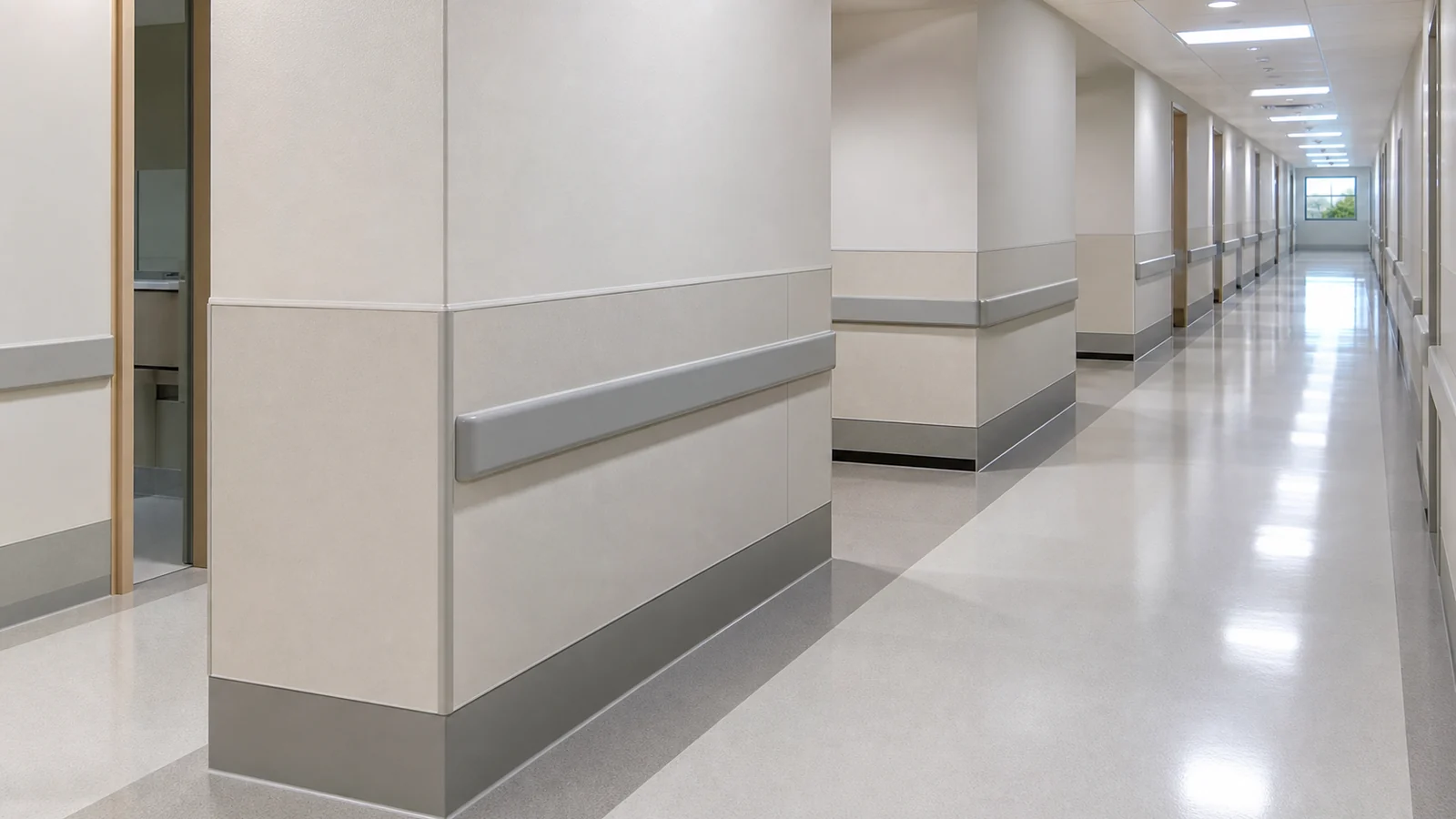
Quick Buyer Summary
| Item | Recommendation |
|---|---|
| Best for | Hospitals, schools, public corridors, airports, care centers, commercial passages |
| Main advantage | Better wall protection and impact resistance |
| Typical structure | SPC impact layer + bamboo fiber composite substrate |
| Surface | Decorative film, easy-clean surface, wood / stone / solid color options |
| Common width | 1220mm |
| Common thickness | 5mm custom / 8mm engineering board / 8mm heavy-duty board |
| Not recommended for | Exterior facade exposure or low-budget temporary decoration |
| Buyer should confirm | Thickness, impact requirement, surface finish, groove type, installation method, packing |
What Is Anti-Collision Wall Panel?
Anti-collision wall panel is a protective interior wall cladding board used to reduce wall damage in high-traffic areas.
Compared with ordinary decorative wall panels, it is designed with a stronger impact resistant layer. This makes it more suitable for public buildings where walls are frequently hit or scratched by people, carts, wheelchairs, cleaning equipment, luggage, or furniture.
It is not a structural wall material. It is a wall surface protection and decorative finishing system.
Product Structure and Material Composition
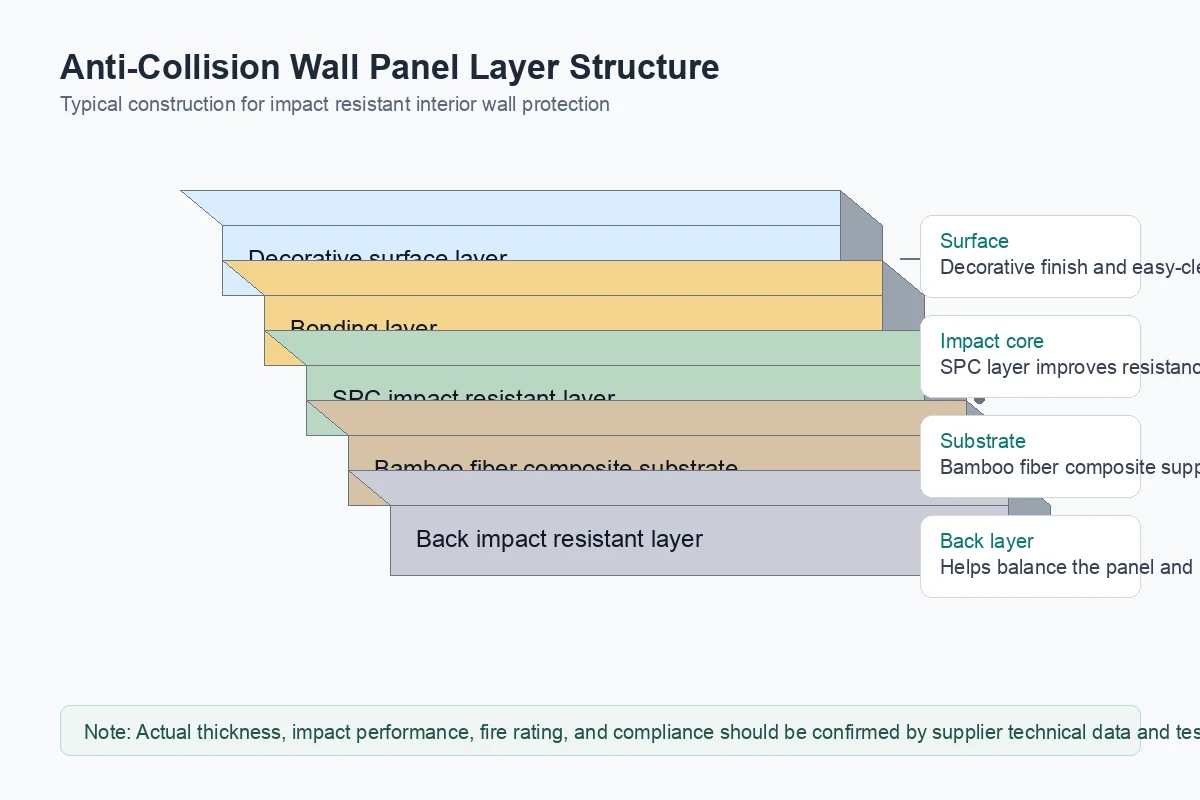
A typical anti-collision wall panel includes the following layers:
| Layer | Function |
|---|---|
| Decorative surface layer | Provides wood, stone, solid color, or commercial interior appearance |
| Bonding layer | Connects the surface and structural layer |
| SPC impact resistant layer | Improves impact resistance and surface durability |
| Bamboo fiber composite substrate | Provides board body, rigidity, and installation stability |
| Back impact resistant layer | Helps improve overall panel strength and balance |
The SPC impact resistant layer is the key difference between anti-collision wall panel and ordinary bamboo fiber wall panel.
For hospitals, schools, and public corridors, the wall protection function is often more important than only the decorative surface.
Key Engineering Performance
| Property | Typical Value / Description |
|---|---|
| Common thickness | 5mm custom / 8mm engineering board / 8mm heavy-duty board |
| Common width | 1220mm; can be cut into smaller widths if required |
| Common length | 2440mm / 2600mm / 2800mm / 3000mm / 3200mm / 3500mm depending on order |
| Surface | Decorative film, easy-clean surface |
| Core structure | Bamboo fiber composite with SPC impact resistant layers |
| Fire performance | Commonly flame-retardant system; exact rating must be confirmed by test report |
| Water resistance | Suitable for normal indoor humid environments |
| Cleaning | Easy to wipe and maintain |
| Application | Hospitals, schools, corridors, airports, public buildings |
Commercial Application Scenarios
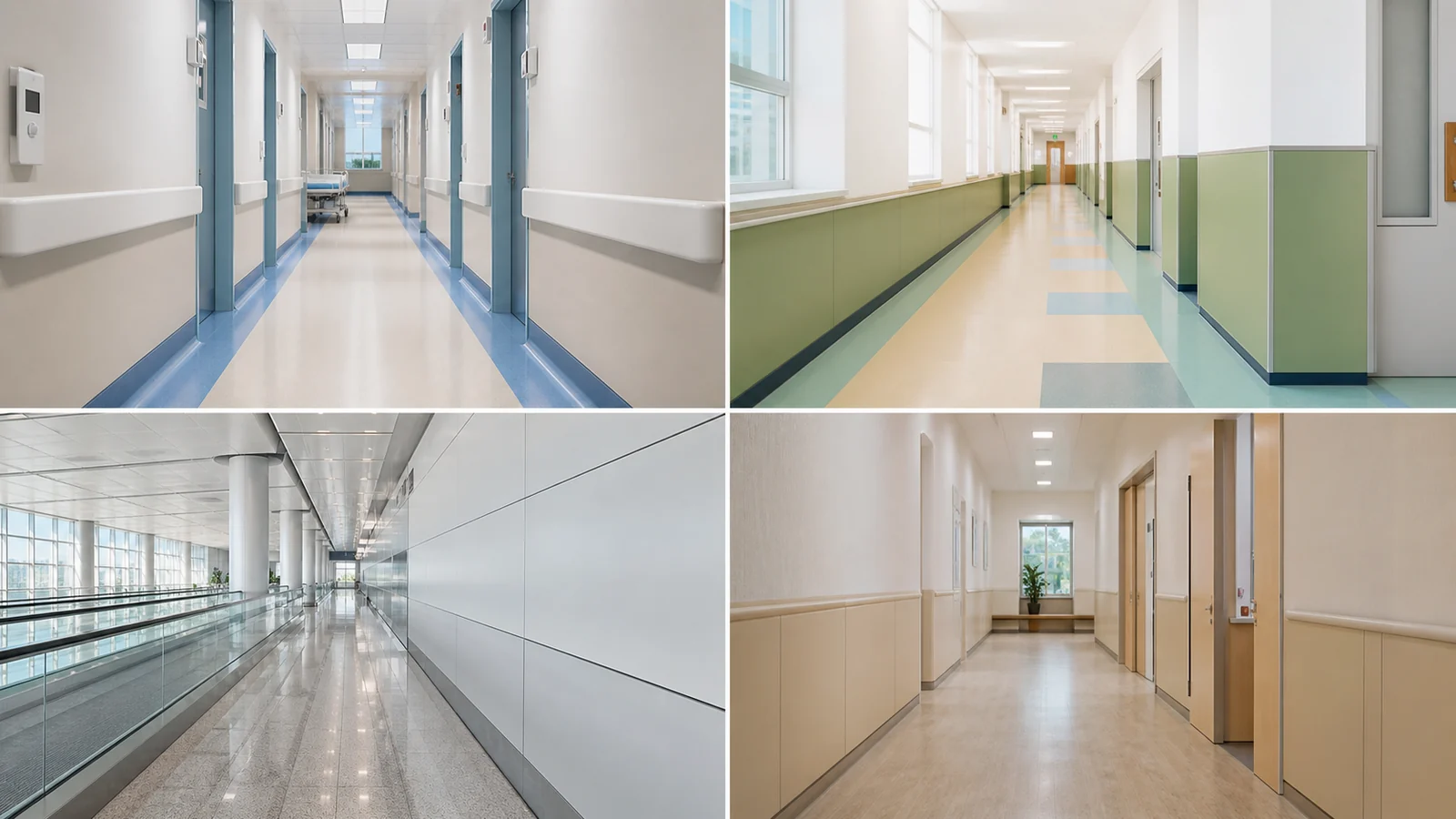
Anti-collision wall panels are mainly used in spaces where walls are easy to damage due to frequent traffic, equipment movement, or cleaning work.
| Project Type | Suitability | Reason |
|---|---|---|
| Hospital corridor | Excellent | Wheelchairs, carts, beds, and equipment may hit walls |
| School corridor | Excellent | High student traffic and daily wall contact |
| Airport passage | High | Luggage and public traffic create wall impact risk |
| Care center | High | Wheelchairs and medical equipment need better wall protection |
| Public corridor | High | Reduces maintenance cost and wall repair frequency |
| Hotel back-of-house area | Medium to high | Useful in service corridors and staff areas |
| Residential interior | Medium | Usually used only when stronger wall protection is needed |
| Exterior facade | Not recommended | This product is mainly for interior wall protection systems |
Installation System and Project Details
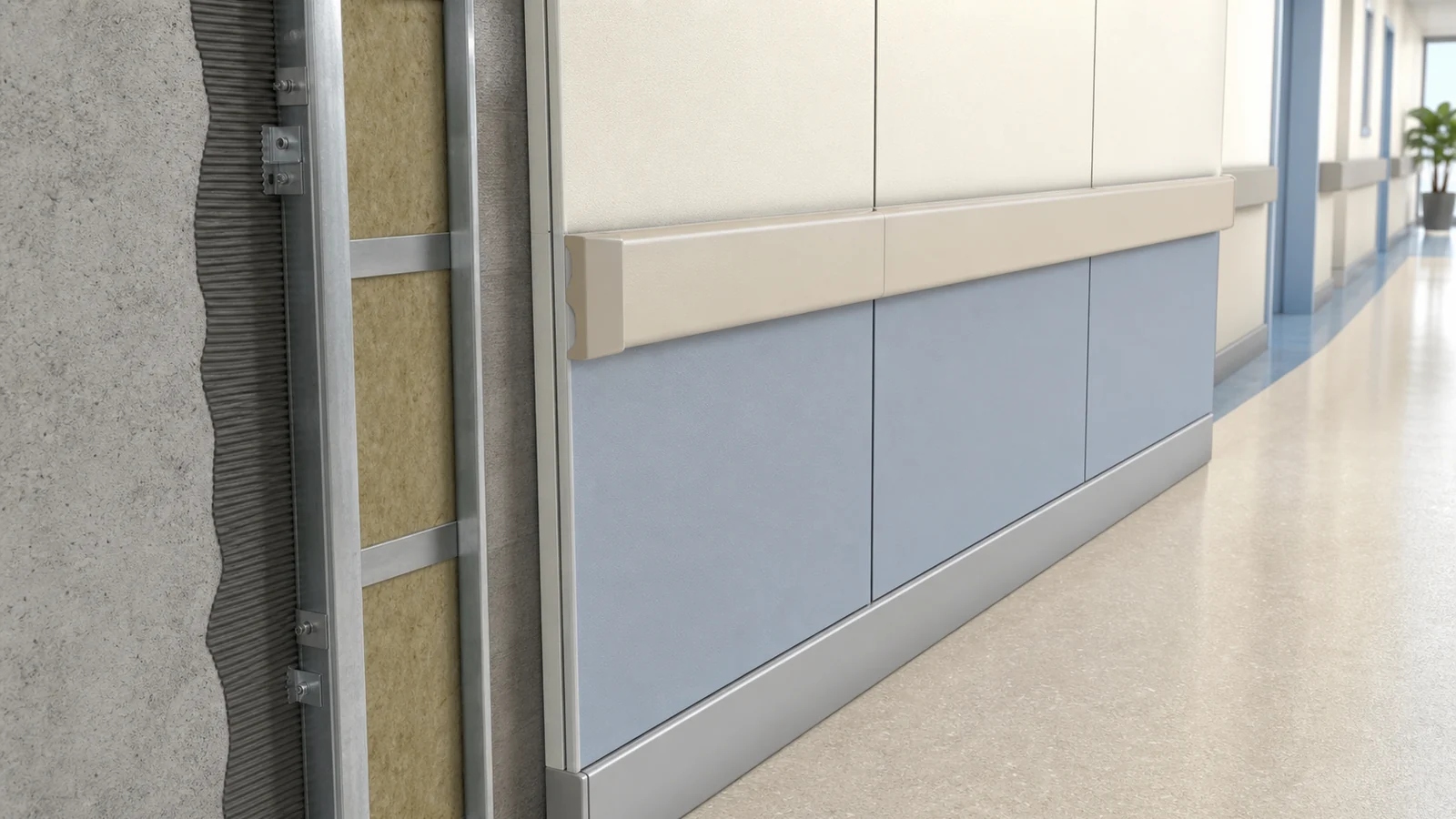
Anti-collision wall panel installation should focus on the impact zone, wall flatness, edge finishing, and joint treatment.
1. Full-Wall Installation
This method is used when the entire wall surface needs protection and decorative finishing.
Key points:
- Better visual consistency
- Suitable for hospital corridors and school corridors
- Requires accurate wall measurement
- Edge trims and joint details should be planned before installation
2. Lower-Wall Protection Installation
This method protects the lower part of the wall where impact is more common.
Key points:
- Cost-effective for public corridors
- Suitable for hospitals, schools, and care centers
- Height should match wheelchair, cart, or luggage impact zone
- Top trim and side trim should be included in quotation
3. Keel Frame Installation
This method is suitable for uneven walls or commercial renovation projects.
Key points:
- Helps control wall flatness
- Suitable for large public wall systems
- Allows better panel alignment
- More suitable when the original wall surface is poor
Common Project Risks
Many anti-collision wall panel problems come from unclear project requirements or incomplete quotation details.
Common risks include:
- Buyer only compares price without comparing panel thickness and weight
- Impact requirement is not clearly defined
- Wall protection height is not confirmed
- Edge trims and closing parts are missing from quotation
- Different production batches cause slight color difference
- Installation wall surface is not flat
- Wrong adhesive is used in humid indoor environments
- Fire rating report is not confirmed before public project use
For public building projects, buyers should confirm samples, thickness, surface finish, impact requirement, installation height, edge trims, and required test reports before bulk order.
How to Choose Between Anti-Collision Wall Panel and Other Wall Panels
| Material | Best Use | Main Advantage |
|---|---|---|
| Anti-collision wall panel | Hospitals, schools, public corridors | Better impact resistance and wall protection |
| Ice-Fire Board | Hospitals, labs, public interiors | Fire-resistant substrate and easy-clean surface |
| Nano Diamond Panel | Commercial corridors and malls | Higher surface hardness and scratch resistance |
| SPC Wall Panel | Bathrooms, kitchens, wet interiors | Waterproof and dimensionally stable |
| Bamboo Fiber Wall Panel | Budget interior renovation | Cost-effective and fast installation |
Choose anti-collision wall panel when the project needs stronger wall protection against carts, wheelchairs, equipment, luggage, and frequent public traffic.
Do not choose it only because it looks decorative. For simple residential wall decoration, bamboo fiber panels or standard PVC wall panels may be more cost-effective.
What Buyers Should Confirm Before Quotation
Before requesting a quotation, please prepare the following information:
- Project type: hospital, school, airport, corridor, care center, office, etc.
- Total wall area in square meters
- Full-wall installation or lower-wall protection
- Required panel height
- Required thickness
- Surface finish and color
- Groove type or joint detail
- Edge trim requirement
- Fire rating or test report requirement
- Installation method: adhesive, keel frame, or modular system
- Packing requirement
- Destination country and port
- Sample requirement before bulk order
Clear information helps suppliers quote accurately and prevents misunderstanding between different product grades.
FAQ
What is an anti-collision wall panel?
It is an impact resistant interior wall protection board used in hospitals, schools, public corridors, airports, and other high-traffic buildings.
Is it the same as ordinary wall panel?
No. Anti-collision wall panel usually has a stronger impact resistant structure than ordinary decorative wall panels.
Can it be used in hospitals?
Yes. Hospital corridors are one of the most common applications because carts, beds, wheelchairs, and equipment may damage ordinary walls.
Can it be used only on the lower part of the wall?
Yes. Many projects use anti-collision wall panels as lower-wall protection to reduce cost while protecting the main impact zone.
Is it waterproof?
It has good water resistance for normal indoor use, but it is not the same as a full waterproof SPC wet-area wall system.
What information is needed for quotation?
Buyers should provide project type, total area, protection height, thickness, surface finish, installation method, edge trim requirement, and destination port.
Internal Links
Nano Diamond Wall Panel
SPC Wall Panel
Bamboo Fiber Wall Panel
Contact / Get Quote page
Request a Quotation
If you are sourcing anti-collision wall panels for a hospital, school, corridor, airport, or public building project, please send us your project details.
Please include:
- Project type
- Wall area
- Protection height
- Required thickness
- Surface finish
- Installation method
- Destination country
We can help check suitable specifications, surface options, packing method, and factory quotation.