
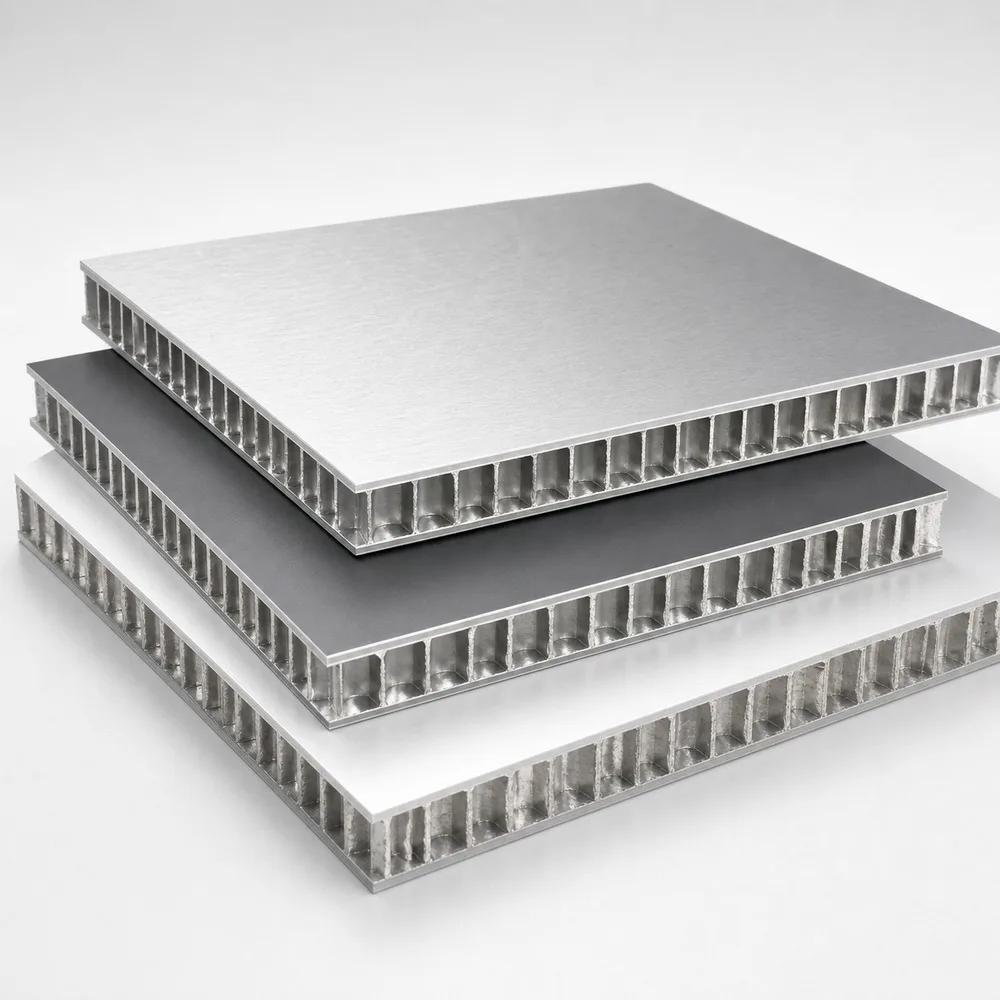
Honeycomb aluminum panels are used when a project needs a lightweight but rigid panel surface. They are often considered for walls, ceilings, soffits, large-format panels and architectural decorative areas.
Practical buyer notes
Honeycomb aluminum panels are useful when a project needs large, flat and lightweight panels for walls, ceilings, partitions or transport interiors. The visible surface is only one part of the decision. Panel thickness, face sheet thickness, honeycomb core, edge closing and fixing method should all be confirmed before production.
| Project detail | Why it matters |
|---|---|
| Panel size | Larger panels need stronger flatness control and safer packing. |
| Face thickness | Affects impact resistance and surface stability. |
| Edge closing | Important for exposed edges and installation quality. |
| Application | Ceiling, wall and cabinet use may require different structures. |
For quotation, send drawings or a size list first. The supplier can then suggest a safer panel structure and packing method.
Quick Answer
A honeycomb aluminum panel typically has two aluminum skins bonded to an aluminum honeycomb core. The honeycomb core helps reduce weight while improving flatness and rigidity compared with many solid materials of similar thickness.
Basic Structure
| Part | Function |
| Top aluminum skin | Provides the visible surface and coating or finish. |
| Adhesive layer | Bonds the skin to the honeycomb core. |
| Aluminum honeycomb core | Creates lightweight stiffness and panel stability. |
| Bottom aluminum skin | Balances the panel structure and supports rigidity. |
Why Buyers Choose Honeycomb Panels
- Lighter weight than many solid alternatives.
- Good flatness for larger panel areas.
- Useful for ceilings, wall panels and decorative architectural applications.
- Can support different finishes such as coating, wood-look, stone-look or metal effects depending on supplier capability.
Common Applications
Honeycomb aluminum panels can be used for commercial ceilings, interior wall surfaces, feature panels, soffit areas, elevator and lobby finishes, and some facade-related applications. The correct specification depends on panel size, finish, installation method and project requirements.
What to Send for Quotation
- Application: wall, ceiling, soffit, facade or interior decoration
- Panel size and thickness
- Surface finish and color requirement
- Quantity or total area
- Drawings if custom fabrication is needed
- Destination country or port
Do Not Skip Drawings for Project Panels
If the panel is used in a project with custom sizes, edges, fixing details or repeated modules, drawings are important. A simple product name is not enough for accurate quotation.
Related Product
For sourcing options, see Aluminum Honeycomb Panel. For comparison with sheet panels, see Aluminum Solid Panel.
Send product type, quantity, specification and destination. Edgar Li can help check suitable China building material options before quotation.