
PU Stone vs Flexible Stone: Lightweight Decorative Stone Panels for Wall Cladding Projects
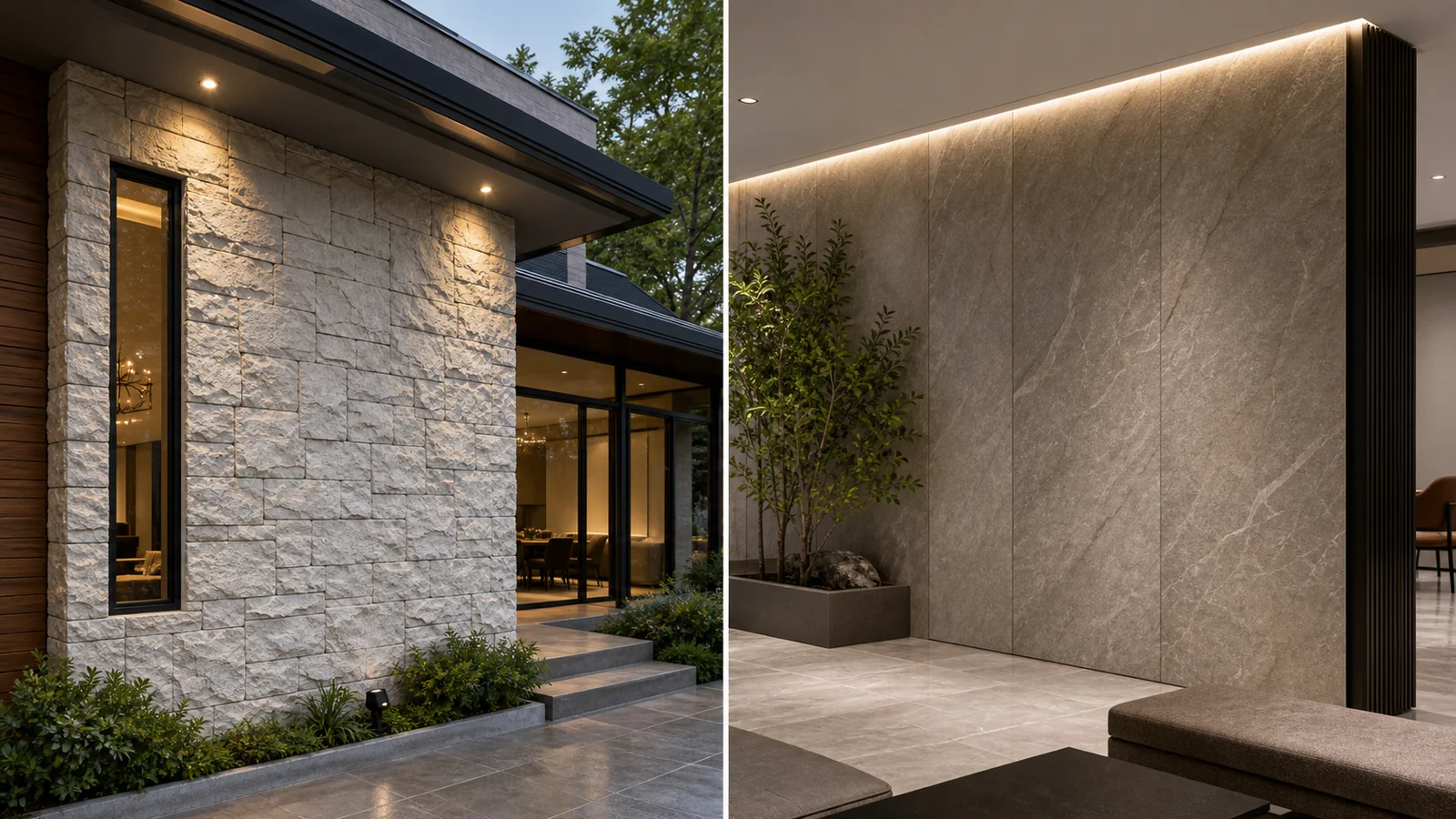
PU Stone and Flexible Stone are two lightweight decorative stone-like materials used for interior and exterior wall cladding projects.
Both materials are designed to replace natural stone in certain decoration projects where lower weight, easier installation, faster construction, and lower cost are important.
However, they are not the same product.
PU Stone is usually thicker and has a stronger 3D stone texture, while Flexible Stone is thinner, lighter, and better for curved surfaces or renovation projects.
For overseas contractors, distributors, and project buyers, understanding the difference between PU Stone and Flexible Stone helps avoid wrong material selection and quotation confusion.
Quick Buyer Summary
| Item | PU Stone | Flexible Stone |
|---|---|---|
| Main material | Polyurethane foam body | Polymer + natural stone powder composite |
| Appearance | Strong 3D artificial stone texture | Thin natural stone-like flexible surface |
| Weight | Lightweight | Very lightweight |
| Flexibility | Low to medium | High |
| Best for | Villa walls, garden walls, commercial feature walls | Curved walls, columns, renovation walls, lightweight facade decoration |
| Installation | Adhesive / screw / panel fixing depending on project | Adhesive installation, easy cutting and bending |
| Main advantage | 3D stone effect and easy installation | Flexible, thin, lightweight, easier for curved surfaces |
| Buyer should confirm | Size, thickness, texture, color, outdoor use, packing | Thickness, bendability, surface texture, backing layer, adhesive system |
What Is PU Stone?
PU Stone is a lightweight decorative stone panel made from polyurethane material.
It is usually produced by mold foaming, then surface-treated with color coating, anti-aging treatment, wear-resistant treatment, flame-retardant treatment, and UV-resistant surface processing depending on product grade.
PU Stone is designed to imitate the appearance of natural stone, cultural stone, stacked stone, or rough wall cladding.
It is often used in:
- Villa exterior walls
- Garden walls
- Commercial feature walls
- Restaurant interiors
- Balcony walls
- Fence and boundary wall decoration
It is not natural stone. It is an artificial lightweight decorative stone-effect panel.
What Is Flexible Stone?
Flexible Stone is a thin and lightweight decorative stone-like sheet made from polymer material and natural stone powder composite.
It keeps part of the texture and appearance of stone while adding flexibility and easier installation.
Flexible Stone is especially useful when the project needs:
- Lightweight wall cladding
- Curved wall decoration
- Column wrapping
- Renovation over existing walls
- Thin stone-like surface finish
- Easier cutting and installation
It is not traditional natural stone slab. It is a flexible decorative stone surface material.
Material Structure Comparison
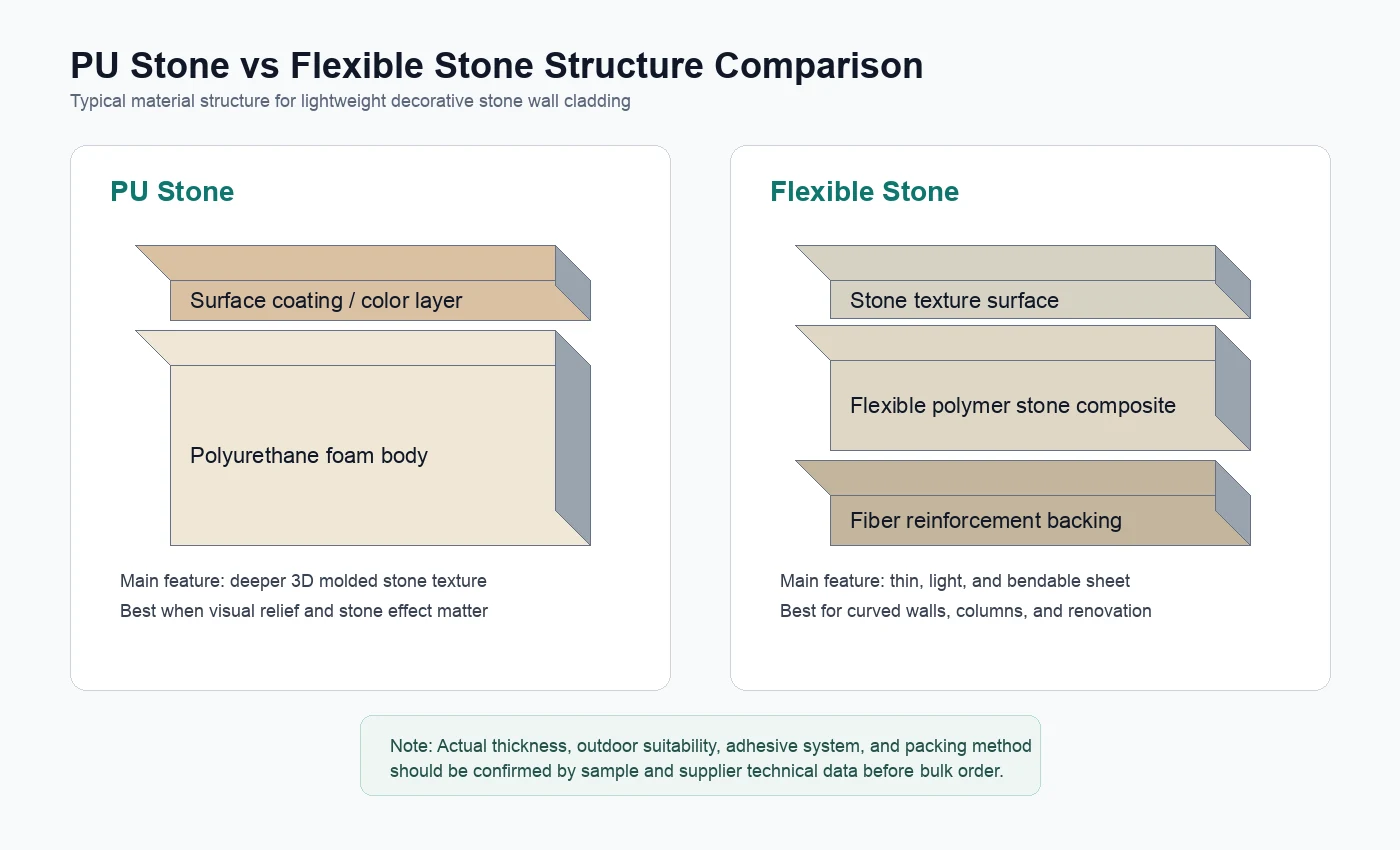
| Structure | PU Stone | Flexible Stone |
|---|---|---|
| Surface | Sprayed color coating and protective surface | Stone texture surface layer |
| Main body | Polyurethane foam molded body | Polymer + stone powder composite layer |
| Reinforcement | Depends on product type | Fiber reinforcement backing |
| Thickness | Usually thicker | Usually thinner |
| Flexibility | Limited | Better flexibility |
| Texture depth | Strong 3D effect | More sheet-like natural texture |
The biggest difference is the body structure.
PU Stone depends on a molded polyurethane body to create a strong three-dimensional stone effect.
Flexible Stone depends on a thinner composite layer to create a lightweight and bendable stone-like surface.
Key Engineering Performance
| Property | PU Stone | Flexible Stone |
|---|---|---|
| Weight | Lightweight compared with natural stone | Very lightweight |
| Water resistance | Good for decorative wall use | Good for indoor and selected exterior use |
| Weather resistance | Depends on surface coating and UV treatment | Depends on formula, coating, and installation |
| Flexibility | Low to medium | High |
| Cutting | Easy to cut compared with stone | Very easy to cut and shape |
| Installation speed | Fast | Fast |
| Best surface effect | 3D stone texture | Thin natural stone-like surface |
| Main risk | Low-grade products may fade or deform | Poor installation may cause edge lifting or surface waves |
Application Scenarios
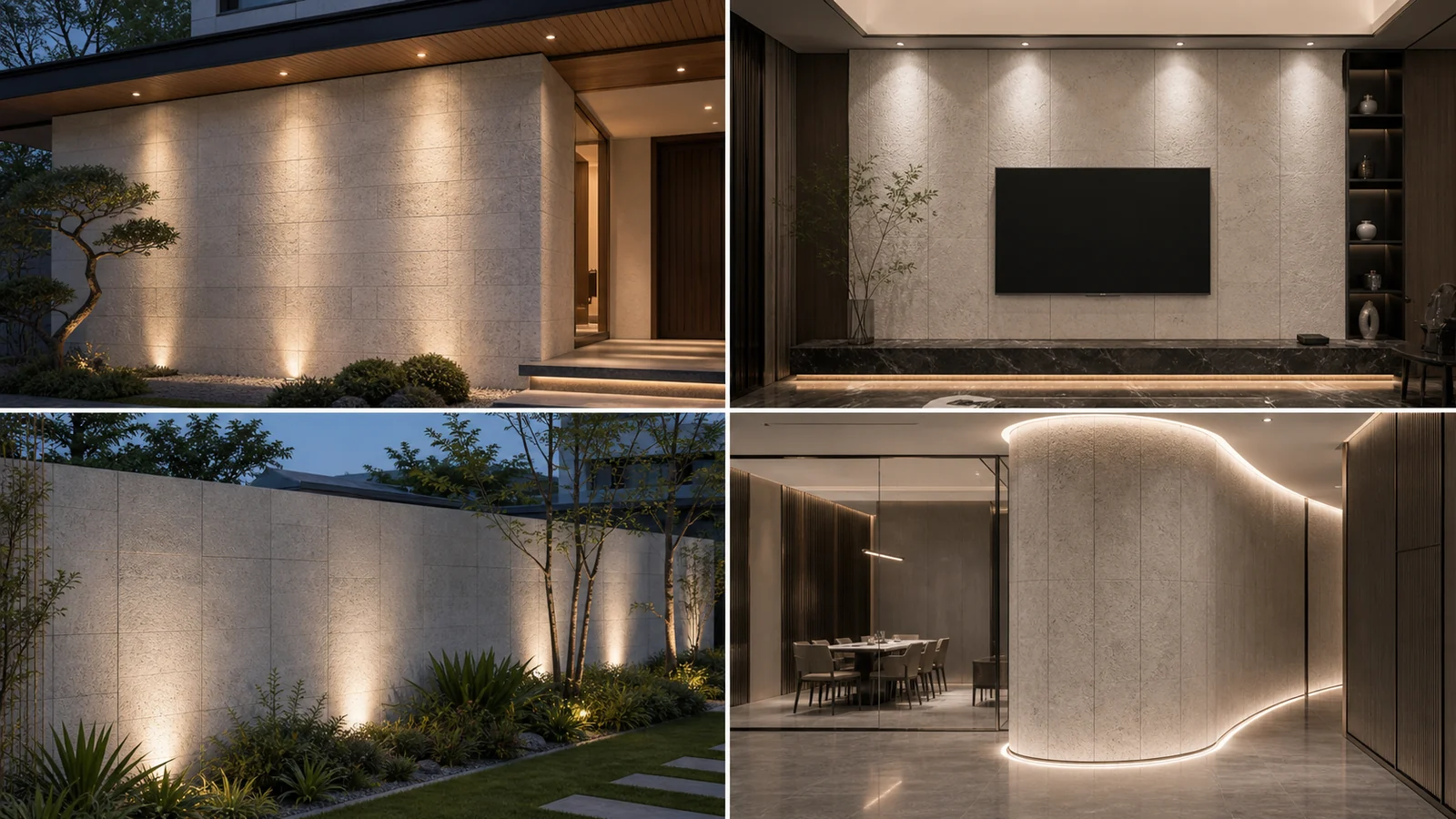
| Project Type | PU Stone | Flexible Stone |
|---|---|---|
| Villa exterior wall | Excellent | High |
| Garden wall | Excellent | Medium to high |
| Commercial feature wall | Excellent | Excellent |
| Restaurant interior | Excellent | Excellent |
| Curved column | Limited | Excellent |
| Curved wall | Limited | Excellent |
| Old wall renovation | High | Excellent |
| High-rise facade | Project-dependent | Project-dependent |
| Luxury natural stone replacement | Medium | Medium |
| Low-budget temporary decoration | Medium | Medium |
Choose PU Stone when the project needs a stronger 3D stone effect.
Choose Flexible Stone when the project needs lightweight, thin, bendable, and easier-to-cut stone-like wall cladding.
Installation System and Project Details
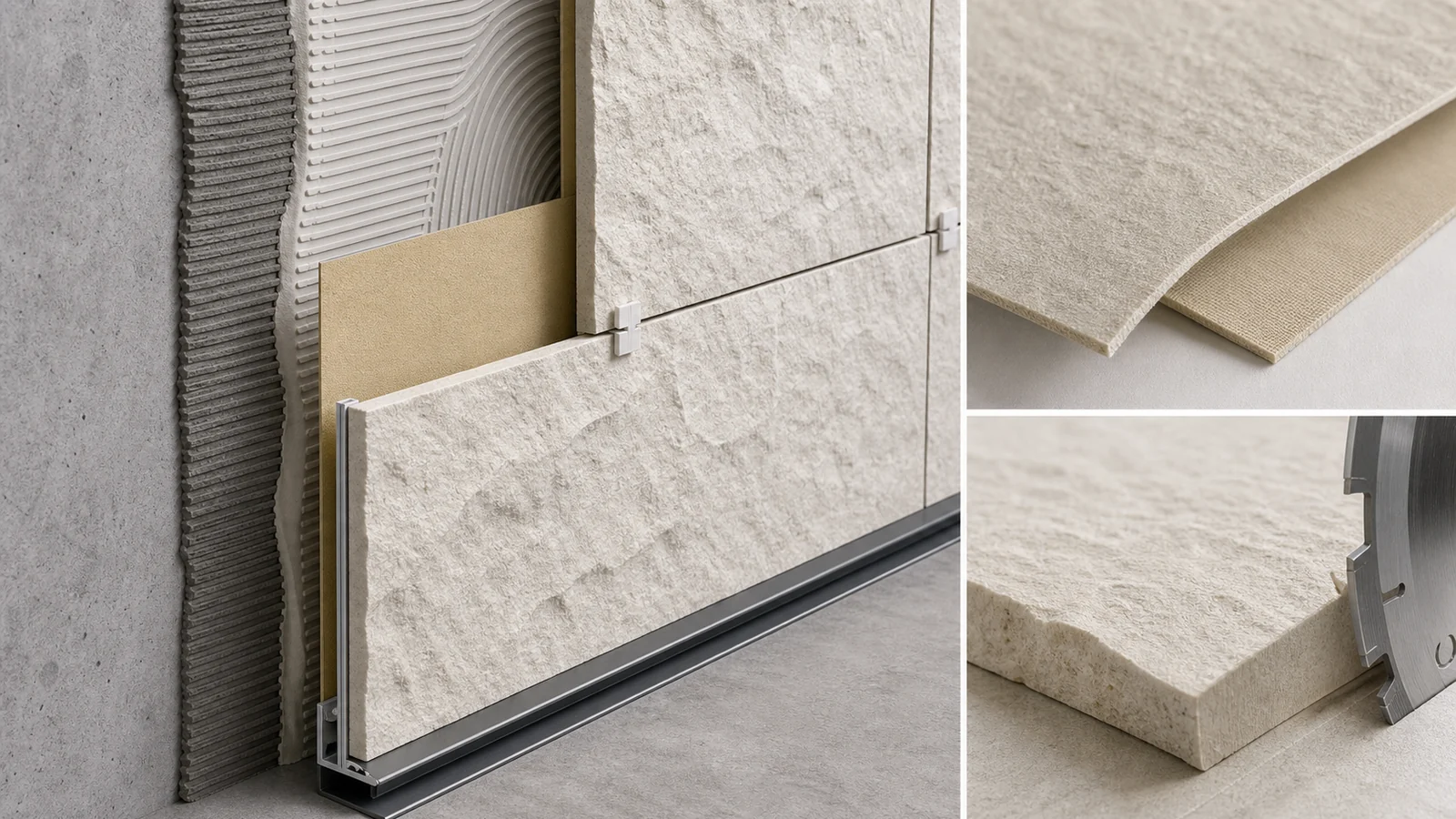
Both materials are easier to install than natural stone, but the installation method is not identical.
PU Stone Installation
Common methods:
- Adhesive fixing
- Screw fixing for some panel types
- Combined adhesive and mechanical fixing for larger panels
- Joint filling or corner treatment depending on texture
Key points:
- Wall substrate should be stable
- Outdoor adhesive must match project environment
- Corners and joints should be planned before installation
- Surface color and texture should be confirmed by sample
Flexible Stone Installation
Common methods:
- Adhesive installation
- Cutting by knife or simple tool
- Bending around curved surfaces
- Edge trimming and joint treatment
Key points:
- Substrate must be clean and flat
- Adhesive coverage should be even
- Curved installation requires test sample first
- Edges must be pressed and finished properly
Common Project Risks
Many decorative stone panel problems come from wrong product selection or poor installation.
Common risks include:
- Buyer chooses PU Stone for curved surfaces where Flexible Stone is better
- Buyer chooses Flexible Stone but expects deep 3D stone texture
- Outdoor UV resistance is not confirmed
- Adhesive is not suitable for exterior temperature and humidity
- Wall substrate is dusty, weak, or uneven
- Corner and joint details are not planned before order
- Color is confirmed only by photos instead of physical samples
- Packing is not strong enough for export shipment
- Different batches cause slight color difference
For export orders, samples, packing method, carton strength, texture, surface coating, and application environment should be confirmed before bulk production.
How to Choose Between PU Stone and Flexible Stone
| Buyer Requirement | Recommended Material |
|---|---|
| Strong 3D stone look | PU Stone |
| Curved wall or column | Flexible Stone |
| Lightweight exterior decorative wall | Both, depending on project |
| Quick renovation over old wall | Flexible Stone |
| Garden wall or villa wall | PU Stone |
| Thin stone-like surface | Flexible Stone |
| Deep cultural stone texture | PU Stone |
| Easy cutting on site | Flexible Stone |
| Commercial feature wall | Both |
The correct choice depends on surface effect, wall shape, project environment, installation method, and budget.
For ordinary indoor decoration without a stone texture requirement, products such as Bamboo Fiber Wall Panel, SPC Wall Panel, Nano Diamond Wall Panel, or Acoustic Wall Panel may be more suitable depending on the room function.
What Buyers Should Confirm Before Quotation
Before requesting a quotation, please prepare the following information:
- Product type: PU Stone or Flexible Stone
- Project type: villa, garden wall, hotel, restaurant, office, facade, interior wall, etc.
- Indoor or outdoor use
- Wall area in square meters
- Required size and thickness
- Surface texture and color
- Flat wall or curved wall
- Installation method
- Corner and edge requirement
- Packing requirement
- Destination country and port
- Sample requirement before bulk order
Clear information helps suppliers recommend the correct product and quote accurately.
FAQ
Is PU Stone real stone?
No. PU Stone is an artificial lightweight decorative stone panel made from polyurethane material.
Is Flexible Stone real stone?
Flexible Stone is made from polymer and stone powder composite. It has a stone-like surface, but it is not a traditional natural stone slab.
Which is better, PU Stone or Flexible Stone?
It depends on the project. PU Stone is better for deep 3D stone texture. Flexible Stone is better for curved surfaces, thin wall cladding, and lightweight renovation.
Can PU Stone be used outdoors?
Yes, some PU Stone products can be used outdoors, but UV resistance, coating quality, adhesive, and project environment must be confirmed.
Can Flexible Stone be used on curved walls?
Yes. Curved wall and column decoration are key advantages of Flexible Stone.
Are these materials easier to install than natural stone?
Yes. Both materials are lighter and easier to cut and install than natural stone, but correct adhesive and substrate preparation are still important.
What information is needed for quotation?
Buyers should provide material type, project location, indoor or outdoor use, wall area, size, texture, color, installation method, and destination port.
Request a Quotation
If you are sourcing PU Stone, Flexible Stone, or lightweight decorative stone wall panels for your project, please send us your project details.
Please include:
- Product type
- Project type
- Indoor or outdoor use
- Wall area
- Surface texture
- Required size
- Destination country
We can help check suitable product options, surface styles, packing method, and factory quotation.