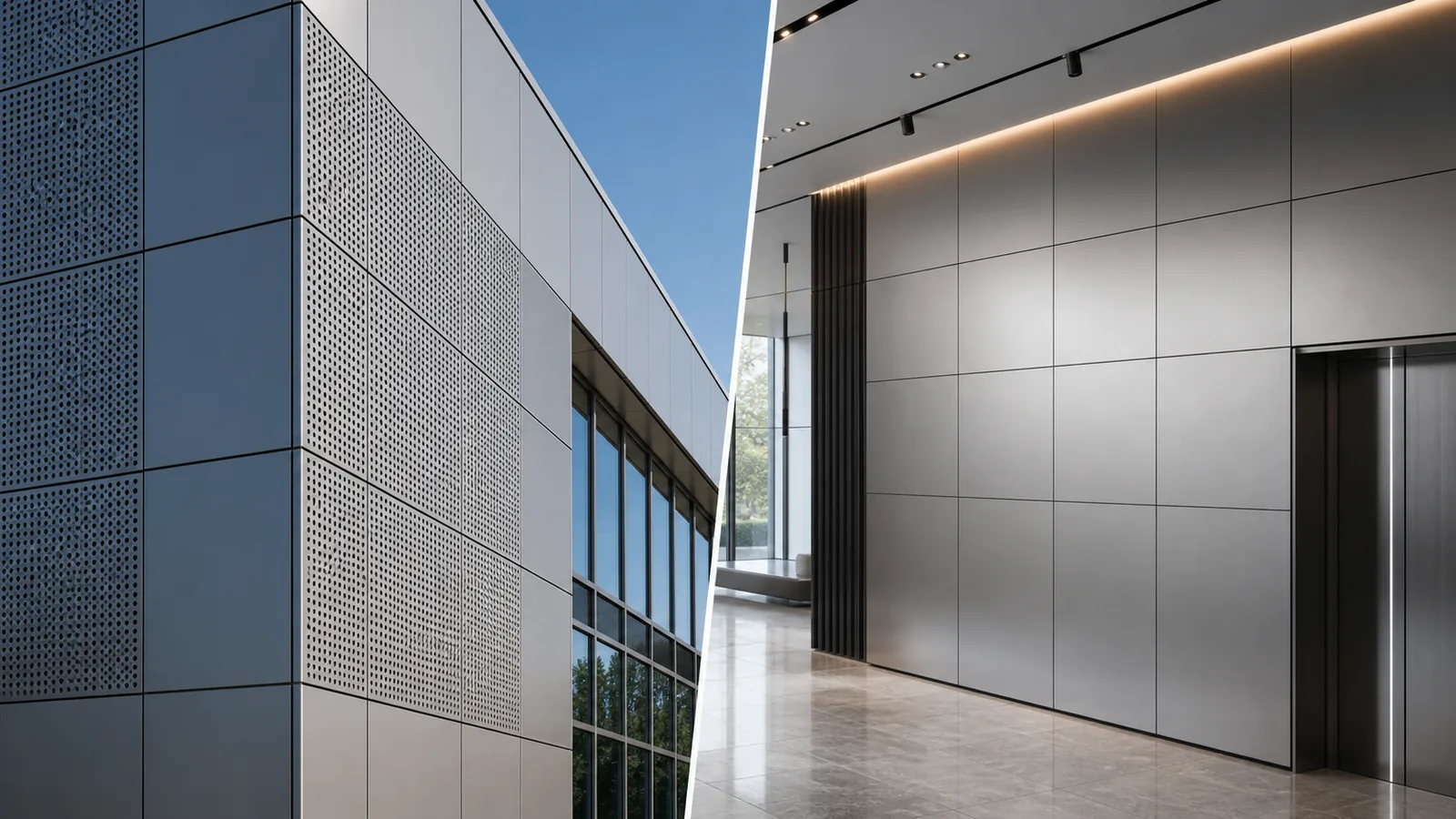
Aluminum Solid Panel and Aluminum Honeycomb Panel are both widely used in architectural wall cladding, ceilings, facades, commercial interiors, transportation buildings, and curtain wall related projects.
They may look similar after installation because both can use PVDF coating, powder coating, wood grain, stone look, metallic finish, and custom colors. However, their structure, weight, fabrication method, flatness, cost logic, and best application scenarios are different.
For overseas contractors, distributors, and project buyers, understanding the difference helps avoid wrong material selection, inaccurate quotation comparison, and project coordination problems.
Quick Buyer Summary
| Item | Aluminum Solid Panel | Aluminum Honeycomb Panel |
|---|---|---|
| Main structure | Single aluminum sheet, formed and finished | Aluminum skins + aluminum honeycomb core composite |
| Best for | Facades, custom shapes, perforated panels, curved panels, decorative screens | Large flat walls, ceilings, lightweight commercial panels |
| Main advantage | Easy fabrication, bending, punching, carving, shaping | Lightweight, rigid, good flatness for large panels |
| Typical surface | PVDF, powder coating, polyester, wood grain, stone look | PVDF, powder coating, polyester, wood grain, stone look, brushed metal |
| Fabrication | Cutting, folding, welding, punching, carving, curving | Panel bonding, edge closing, frame system, large-format flat panel |
| Buyer should confirm | Thickness, alloy, coating, shape, perforation, edge return, stiffener | Total thickness, skin thickness, honeycomb core, coating, panel size, edge detail |
What Is Aluminum Solid Panel?
Aluminum Solid Panel is an architectural panel made from a single aluminum sheet.
The sheet is cut, folded, welded, punched, carved, curved, or finished according to project drawings. It is widely used in building facades, curtain wall panels, entrance canopies, ceilings, soffits, columns, screens, and customized decorative aluminum systems.
Common applications include:
- Aluminum facade panels
- Curtain wall cladding
- Perforated aluminum panels
- Carved aluminum screens
- Curved aluminum panels
- Ceiling and soffit panels
- Column cladding
- Entrance and canopy decoration
Aluminum solid panel is often selected when the project needs custom fabrication and flexible architectural shapes.
What Is Aluminum Honeycomb Panel?
Aluminum Honeycomb Panel is a lightweight composite panel made by bonding two aluminum sheets to an aluminum honeycomb core.
The honeycomb core works like a lightweight structural grid. It reduces weight while improving panel rigidity and surface flatness.
Common applications include:
- Large interior wall panels
- Commercial ceiling panels
- Airport or metro ceiling systems
- Office lobby wall cladding
- Hotel public area walls and ceilings
- Large-format commercial panels
- Selected facade systems depending on project design
Aluminum honeycomb panel is often selected when the project needs large flat panels with low weight and good rigidity.
Structure Comparison
| Structure | Aluminum Solid Panel | Aluminum Honeycomb Panel |
|---|---|---|
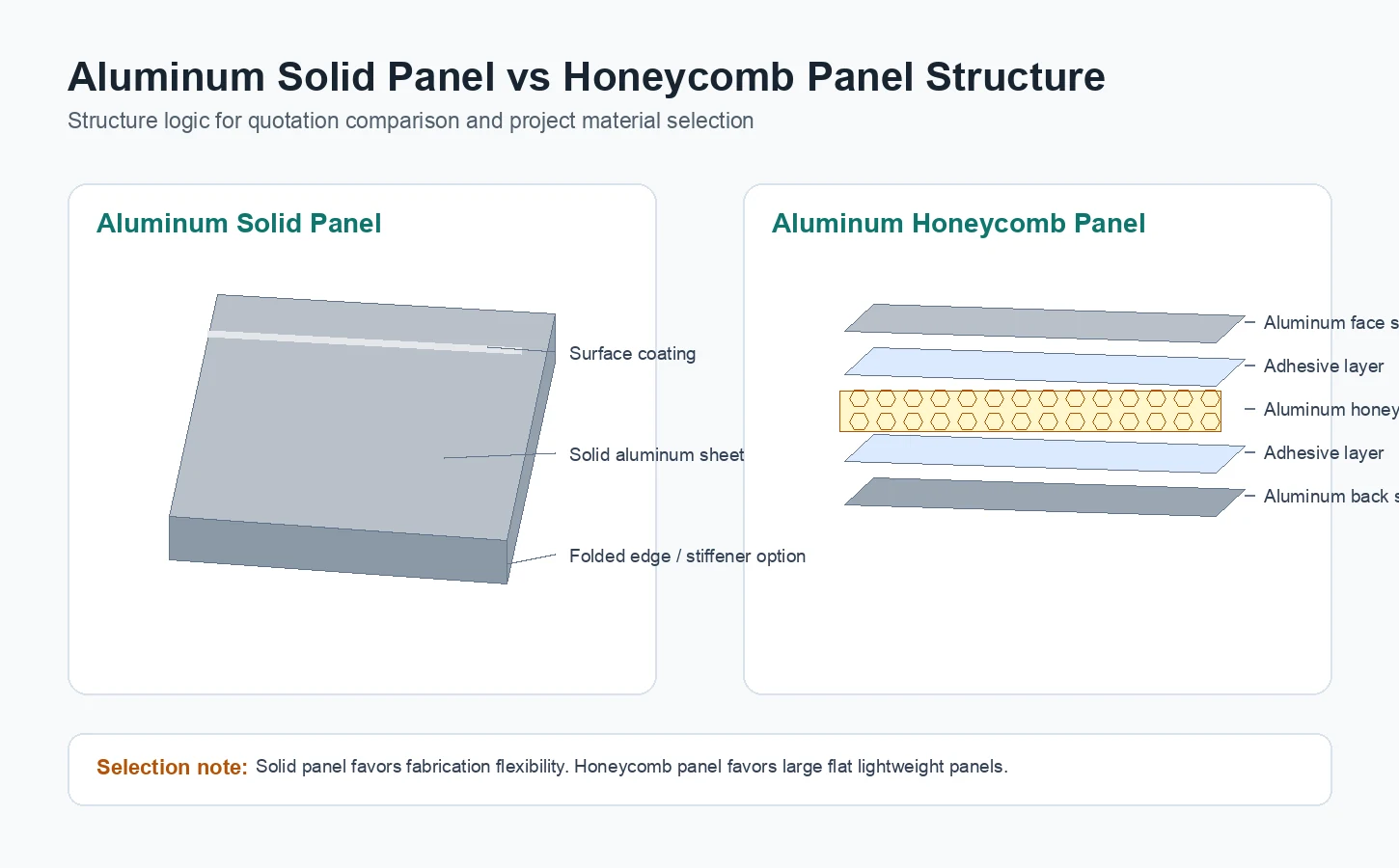
| Main body | Single aluminum sheet | Aluminum skin + honeycomb core + back sheet |
| Core material | No core | Aluminum honeycomb core |
| Edge structure | Folded edge or return edge | Edge closing / frame / composite edge detail |
| Surface finish | Coating directly on aluminum sheet | Coating on aluminum face sheet |
| Weight logic | Depends mainly on sheet thickness | Lower weight compared with equivalent solid metal thickness |
| Flatness logic | Needs stiffener for larger panels | Honeycomb core helps maintain panel flatness |
The main difference is structural design.
Aluminum solid panel is a formed metal sheet.
Aluminum honeycomb panel is a composite sandwich panel.
Fabrication and Design Difference
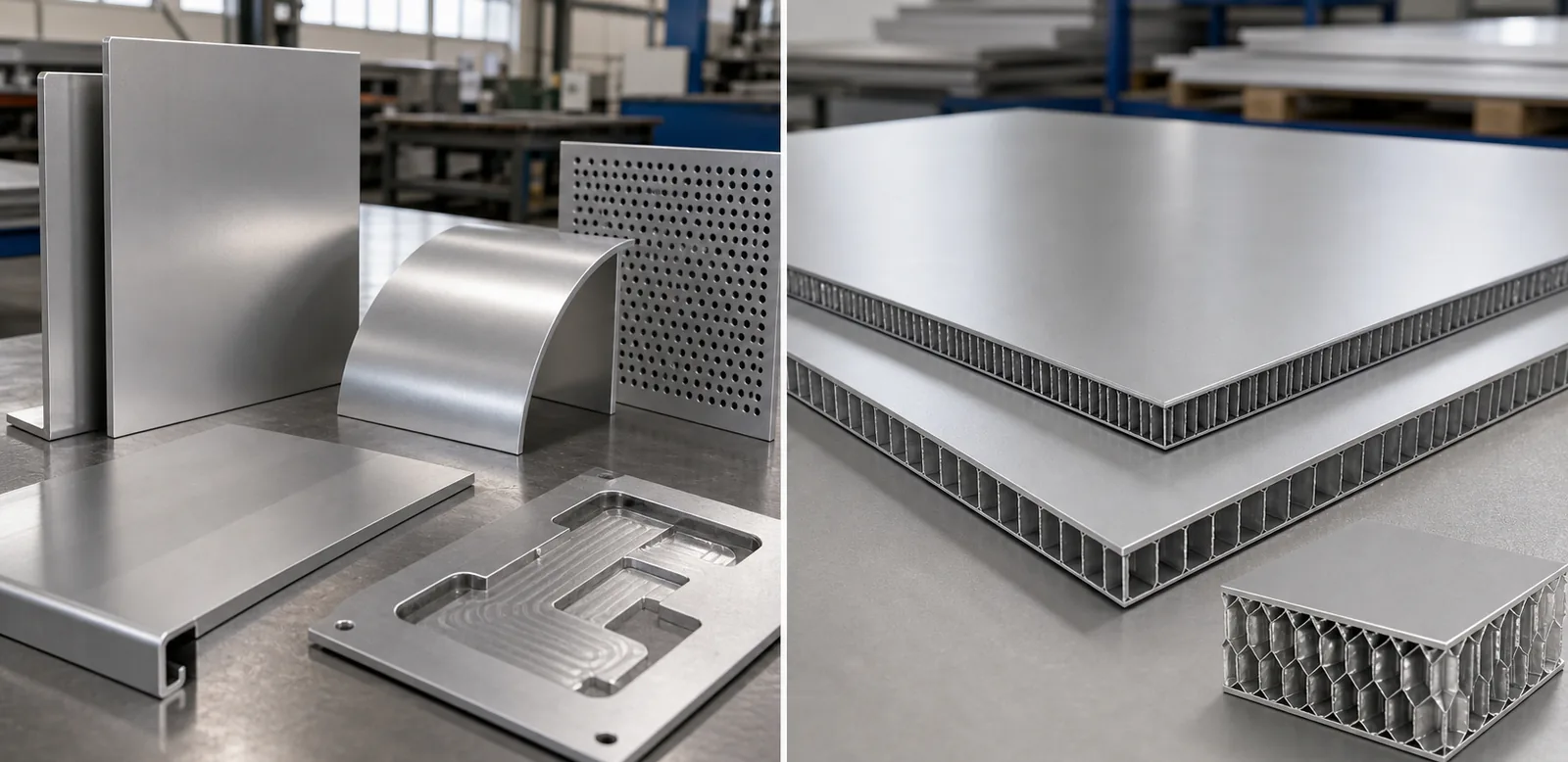
Aluminum solid panel is usually more flexible for fabrication.
It is better for:
- Folding and edge return
- Punching holes
- CNC carving
- Custom screens
- Curved shapes
- Hyperbolic or special-shaped panels
- Small and medium facade panels
- On-site design changes in some projects
Aluminum honeycomb panel is better for:
- Large flat surfaces
- Lightweight ceiling panels
- Large commercial wall cladding
- Projects requiring better flatness
- Transportation building ceilings
- Premium interior large panels
If a project has many curves, perforations, carvings, or complex shapes, aluminum solid panel is usually easier to manage.
If a project has large flat walls or ceilings where weight and flatness are more important, aluminum honeycomb panel may be better.
Key Engineering Comparison
| Property | Aluminum Solid Panel | Aluminum Honeycomb Panel |
|---|---|---|
| Weight | Heavier at similar visible size | Lighter due to honeycomb core |
| Flatness | Good, but large panels may need stiffeners | Better for large flat panel surfaces |
| Fabrication flexibility | Excellent | Limited compared with solid panel |
| Curved shapes | Easier | More limited |
| Perforation / carving | Easier | More complex |
| Large ceiling use | Possible, but weight must be checked | Very suitable |
| Impact resistance | Depends on thickness and stiffener | Depends on skin thickness and core structure |
| Edge detail | Folded edge common | Edge closing or frame detail required |
| Cost logic | Depends on thickness, coating, shape, processing | Depends on total thickness, skin thickness, core, bonding, size |
| Best value | Custom facade and decorative fabrication | Large lightweight flat wall/ceiling systems |
Final performance depends on aluminum alloy, panel thickness, surface coating, stiffener design, honeycomb core size, adhesive system, edge detail, fixing method, and project engineering design. Buyers should confirm drawings and technical data before production. When a project requires exact fire rating, wind load, coating warranty, or structural performance, project must confirm supplier data, drawings, and test report.
Application Scenarios
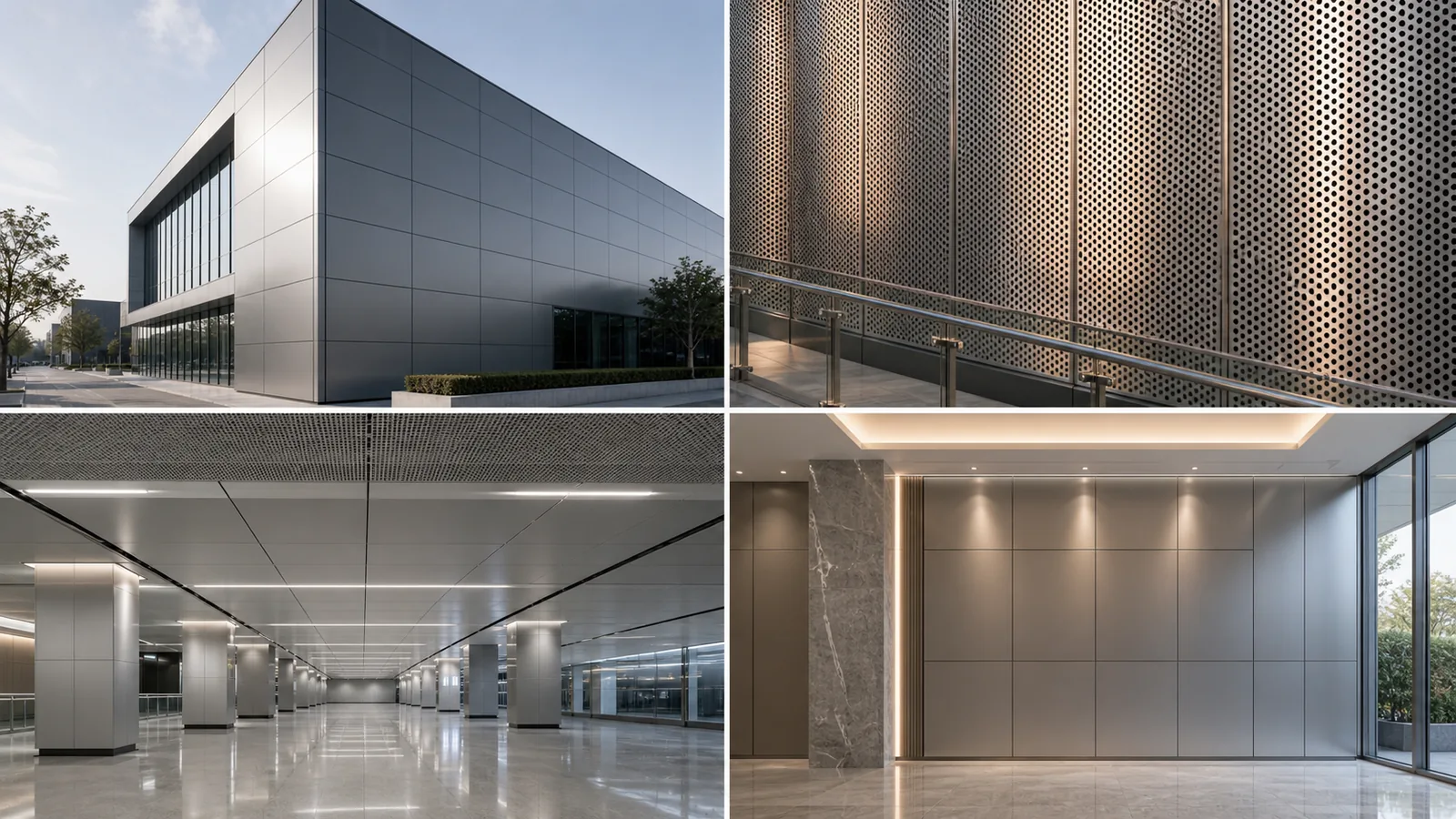
| Project Type | Aluminum Solid Panel | Aluminum Honeycomb Panel |
|---|---|---|
| Building facade | Excellent | Project-dependent |
| Curtain wall cladding | Excellent | High, depending on design |
| Perforated facade | Excellent | Limited |
| Carved screen | Excellent | Not typical |
| Curved wall panel | Excellent | Limited |
| Large interior wall | High | Excellent |
| Commercial ceiling | High | Excellent |
| Airport / metro ceiling | Medium to high | Excellent |
| Office lobby wall | High | Excellent |
| Hotel public area | High | Excellent |
| Low-budget temporary decoration | Not recommended | Not recommended |
Choose aluminum solid panel when the project requires custom fabrication, complex geometry, perforation, carving, folding, or facade flexibility.
Choose aluminum honeycomb panel when the project requires large flat panels, lightweight structure, and better surface flatness. For ceiling-focused projects, also review Aluminum Ceiling Panels.
Installation System and Project Details
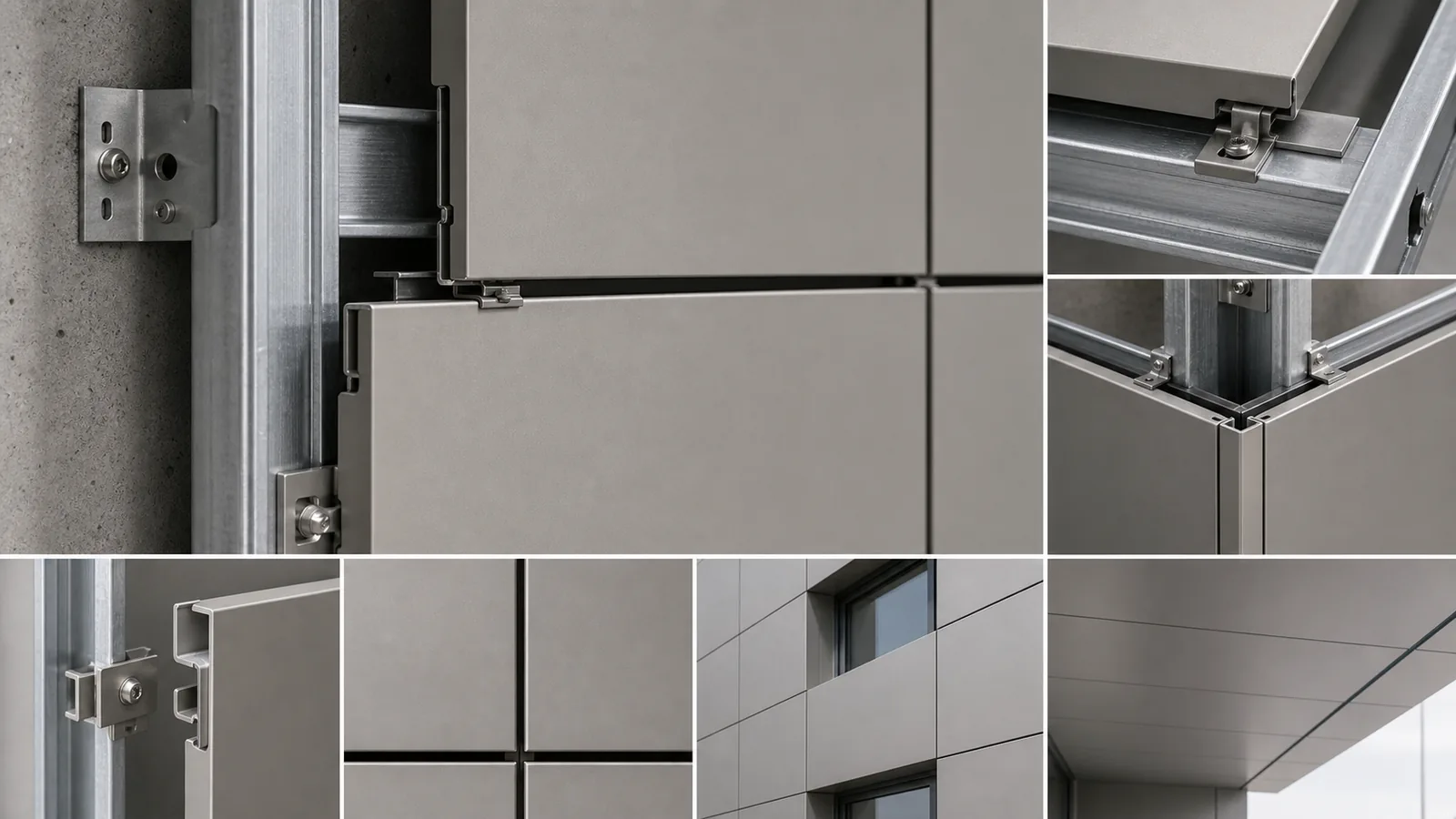
Both aluminum solid panels and aluminum honeycomb panels usually require a metal subframe or fixing system.
1. Aluminum Solid Panel Installation
Common system:
- Metal subframe
- Angle brackets or clips
- Stiffeners for larger panels
- Edge return and fixing holes
- Joint planning
Key points:
- Shop drawings should be confirmed before fabrication
- Panel numbering is important for custom facades
- Stiffener position affects flatness
- Coating direction and batch should be controlled
2. Aluminum Honeycomb Panel Installation
Common system:
- Metal subframe
- Hanging system
- Concealed fixing
- Edge frame system
- Ceiling suspension system
Key points:
- Large panel size requires accurate subframe
- Edge closing detail must be confirmed before production
- Ceiling panels need suspension and access planning
- Lighting openings and service panels should be coordinated early
3. Joint and Edge Details
For both materials, joint width and edge detail affect final appearance.
Buyers should confirm:
- Open joint or sealed joint
- Edge return size
- Corner detail
- Fixing method
- Panel numbering
- Coating direction
- Installation tolerance
Common Project Risks
Many aluminum panel project problems come from unclear drawings, incomplete specifications, or wrong comparison between different panel systems.
Common risks include:
- Buyer compares price without comparing aluminum thickness
- Honeycomb panel quoted with different skin thickness
- Solid panel quoted without stiffeners
- Panel size confirmed before final site measurement
- Coating system not matched with indoor or outdoor environment
- Edge detail missing from quotation
- Shop drawings not confirmed before production
- Different batches cause slight color difference
- Perforation or carving details are unclear
- Packaging not strong enough for long export shipment
- Installation accessories not included in quotation
For export orders, buyers should confirm drawings, thickness, coating, color, panel size, edge detail, fixing system, packing, and sample before mass production.
How to Choose Between Aluminum Solid Panel and Aluminum Honeycomb Panel
| Buyer Requirement | Recommended Product |
|---|---|
| Custom facade panel | Aluminum Solid Panel |
| Perforated aluminum panel | Aluminum Solid Panel |
| Carved decorative screen | Aluminum Solid Panel |
| Curved or special-shaped panel | Aluminum Solid Panel |
| Large flat interior wall | Aluminum Honeycomb Panel |
| Lightweight ceiling panel | Aluminum Honeycomb Panel |
| Airport or metro ceiling | Aluminum Honeycomb Panel |
| Office lobby large panel | Aluminum Honeycomb Panel |
| Project needs maximum fabrication flexibility | Aluminum Solid Panel |
| Project needs lightweight and flatness | Aluminum Honeycomb Panel |
The correct choice depends on project drawings, panel size, shape complexity, installation system, weight requirement, and budget.
Aluminum Solid Panel vs Honeycomb Panel vs Other Aluminum Panels
| Material | Best Use | Main Advantage |
|---|---|---|
| Aluminum Solid Panel | Facades, custom panels, perforated panels, curved panels | Fabrication flexibility |
| Aluminum Honeycomb Panel | Large walls, ceilings, lightweight commercial panels | Lightweight, rigid, and flat |
| Aluminum Composite Panel | Budget facade, signage, light-duty cladding | Lower cost and easy handling |
| Aluminum Ceiling Panel | Indoor ceilings, soffits, corridors | Modular ceiling use |
| Perforated Aluminum Panel | Facades, screens, acoustic or decorative panels | Ventilation and design effect |
Do not choose the material only by name. The correct panel type should match the project drawing and performance requirement. For exterior projects, review the Aluminum Facade Panels supplier guide before comparing quotation details.
What Buyers Should Confirm Before Quotation
Before requesting a quotation, please prepare the following information:
- Project type: facade, wall, ceiling, canopy, lobby, airport, hotel, office, etc.
- Product type: aluminum solid panel or aluminum honeycomb panel
- Indoor or outdoor use
- Total area in square meters
- Panel size or layout drawing
- Aluminum thickness or skin thickness
- Total panel thickness if honeycomb panel
- Honeycomb core size if required
- Surface finish and color
- Coating requirement: PVDF, powder coating, polyester, wood grain, stone look, etc.
- Perforation, carving, bending, or curved shape requirement
- Edge return or edge closing detail
- Installation system
- Packing requirement
- Destination country and port
- Sample requirement before bulk order
Clear information helps suppliers quote accurately and prevents misunderstanding between different aluminum panel systems.
FAQ
Is aluminum honeycomb panel better than aluminum solid panel?
It depends on the project. Aluminum honeycomb panel is better for large flat lightweight walls and ceilings. Aluminum solid panel is better for custom fabrication, perforation, bending, carving, and facade shapes.
Which panel is lighter?
Aluminum honeycomb panel is usually lighter than a solid metal panel with similar overall thickness because of its honeycomb core structure.
Which panel is better for facades?
Aluminum solid panel is commonly used for facades because it is easier to fabricate into custom shapes and edge details. Aluminum honeycomb panel can also be used in selected facade systems if project design and fixing method are suitable.
Which panel is better for ceilings?
Aluminum honeycomb panel is often suitable for large commercial ceilings because it is lightweight and flat. Aluminum solid panel can also be used for ceiling and soffit panels depending on size and design.
Can aluminum solid panel be perforated?
Yes. Aluminum solid panel is suitable for perforation, carving, bending, and many custom decorative processes.
What information is needed for quotation?
Buyers should provide product type, project drawings, total area, panel size, thickness, coating, color, fabrication requirement, installation method, packing requirement, and destination port.
Request a Quotation
If you are comparing Aluminum Solid Panel and Aluminum Honeycomb Panel for a facade, wall, ceiling, or commercial interior project, please send us your project details.
Please include:
- Project type
- Drawing or panel size
- Total area
- Product type
- Thickness requirement
- Surface finish
- Indoor or outdoor use
- Destination country
We can help check suitable aluminum panel options, surface finishes, packing method, and factory quotation.
Request Aluminum Panel Quotation
Send your drawings, panel size, thickness, surface finish, quantity and destination port. We can help check suitable aluminum panel options, fabrication details, packing method and factory quotation.