
Aluminum panels from China are widely used for building facades, curtain wall cladding, ceilings, soffits, canopies, columns, screens, commercial interiors, transportation buildings and hotel projects.
For many overseas buyers, importing aluminum panels is not only about finding a square meter price.
A successful order usually requires product selection, drawings, coating confirmation, sample approval, quotation review, shop drawing coordination, production inspection, export packing, shipping arrangement and installation communication.
This guide explains the practical sourcing process for overseas contractors, distributors, small B buyers, architects and project buyers who want to import aluminum panels from China.

Quick Buyer Summary
| Step | What Buyers Should Prepare |
|---|---|
| RFQ | Project type, panel type, drawings, quantity, thickness, finish and destination |
| Product selection | Aluminum solid panel, honeycomb panel, perforated panel, curved panel, ceiling panel or decorative panel |
| Coating selection | PVDF, powder coating, polyester, wood grain, stone look or metallic finish |
| Sample approval | Color sample, coating sample, folded edge sample or fabrication mock-up |
| Quotation review | Check whether thickness, coating, edge return, stiffener, packing and shipping are included |
| Shop drawings | Confirm panel layout, panel schedule, numbering and fabrication details |
| Production | Follow approved drawings, samples and specifications |
| Inspection | Check size, coating, edge return, quantity, packing and labels |
| Export packing | Protect coating, corners, folded edges, perforated panels, curved shapes and decorative finishes |
| Shipping | Confirm Incoterms, destination port, documents and freight forwarder |
| Installation coordination | Confirm panel numbering, subframe, brackets, joint control and site handling |
Why Importing Aluminum Panels Is Different from Buying Standard Products
Aluminum panels are usually project-based materials.
A buyer may request:
- Aluminum solid facade panels
- Aluminum honeycomb panels
- Aluminum ceiling panels
- Aluminum soffit panels
- Perforated aluminum panels
- Carved aluminum panels
- Curved aluminum panels
- Hyperbolic aluminum panels
- Wood grain aluminum panels
- Stone look aluminum panels
- Custom color coated aluminum panels
Each product may require different drawings, surface finish, fabrication detail, packing method and installation coordination.
This is why importing aluminum panels should be managed as a project, not only as a simple product purchase. If you are still comparing product types, start with the aluminum solid panel vs aluminum honeycomb panel guide.
Aluminum Panel Import Process Overview
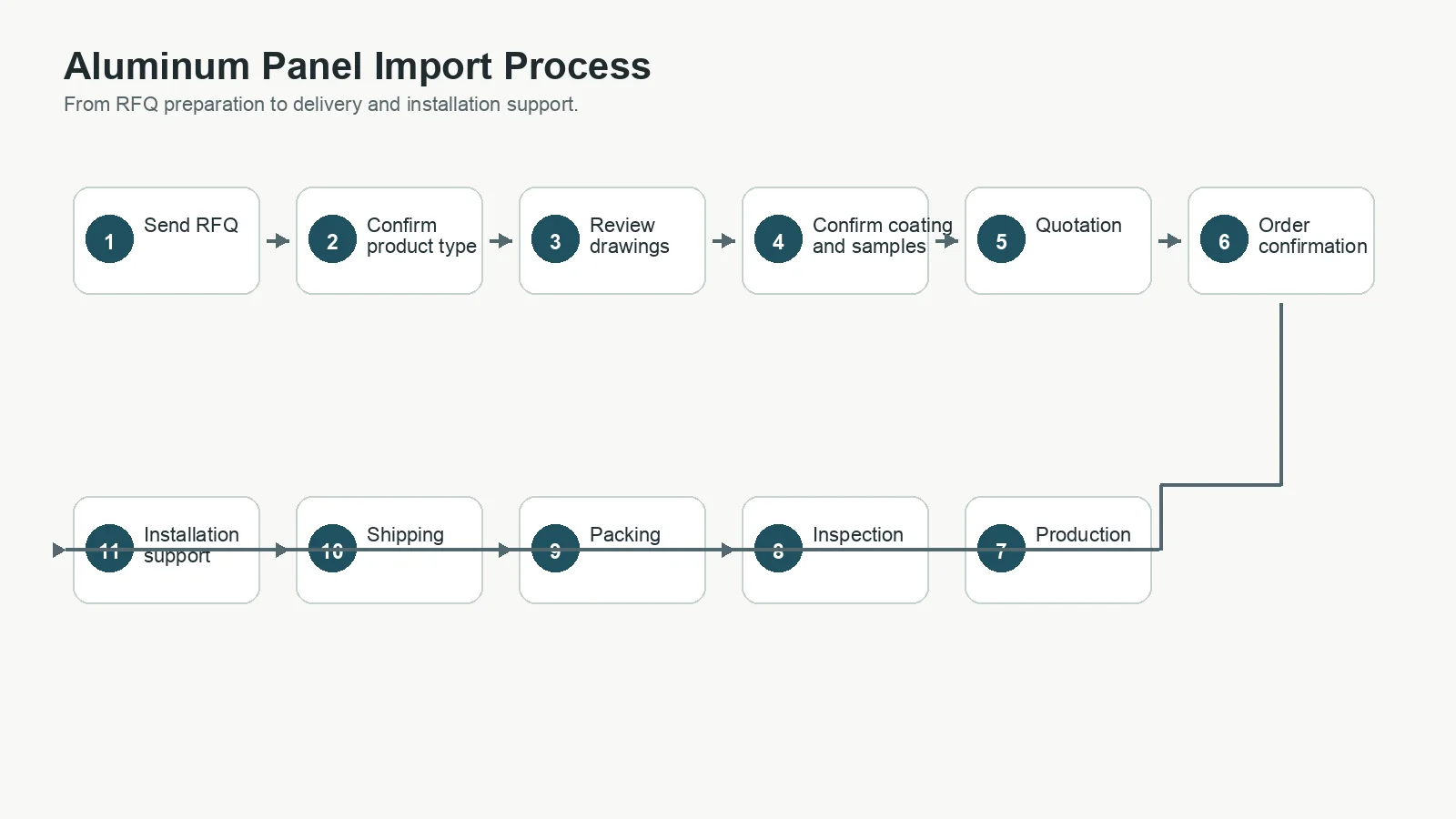
A practical import workflow may include:
- Buyer sends RFQ
- Supplier confirms product type and application
- Buyer provides drawings, photos or dimensions
- Supplier reviews panel size, thickness, finish and fabrication details
- Buyer confirms sample or surface finish
- Supplier prepares quotation
- Buyer checks quotation scope
- Shop drawings and panel schedule are confirmed if needed
- Order is confirmed
- Production starts
- Inspection is arranged
- Export packing is completed
- Shipping documents are prepared
- Goods are shipped
- Buyer receives goods and coordinates installation
The exact workflow depends on project size, product complexity and buyer requirement.
Step 1: Prepare a Clear RFQ
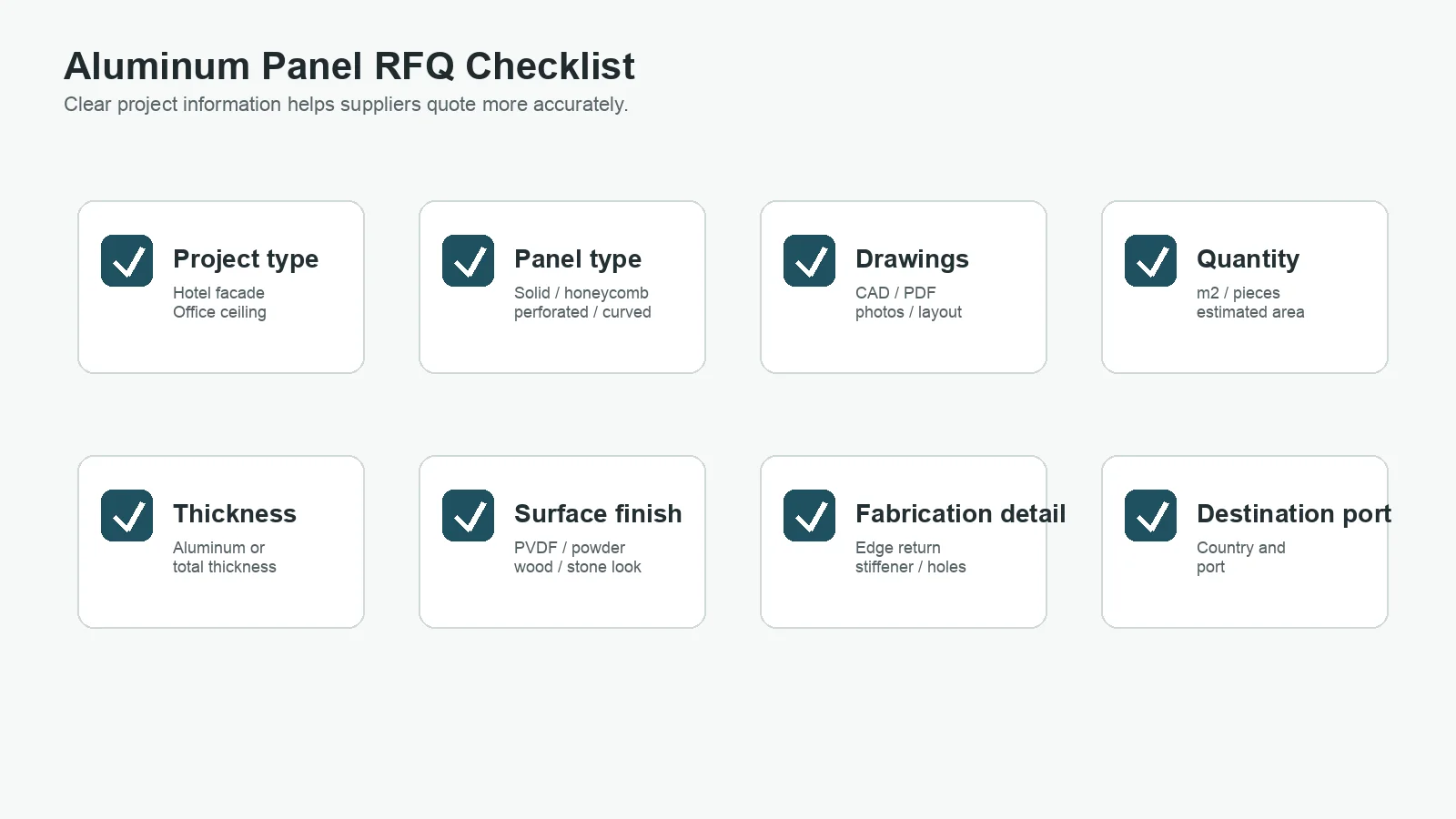
A good RFQ helps suppliers understand the project faster.
Buyers should prepare:
| RFQ Item | Example |
|---|---|
| Project type | Hotel facade, office ceiling, mall canopy, villa soffit, metro station ceiling |
| Product type | Aluminum solid panel, honeycomb panel, perforated panel, curved panel, ceiling panel |
| Application | Facade, soffit, ceiling, column, screen, wall, canopy |
| Drawings | CAD drawings, PDF drawings, elevation drawings, layout drawings or reference photos |
| Quantity | Square meters, pieces or estimated project area |
| Panel size | Standard size, custom size or based on drawings |
| Thickness | Aluminum thickness or total panel thickness |
| Surface finish | PVDF, powder coating, wood grain, stone look, metallic, etc. |
| Fabrication | Edge return, stiffener, perforation, carving, curving, holes or cut-outs |
| Destination | Country and port |
| Order type | Sample, trial order, project order or distributor starter order |
If the buyer only sends a reference image, the supplier can provide only a rough direction.
If the buyer sends drawings, quantity, finish and destination, the quotation can be more accurate. For more quotation details, see the aluminum facade panel quotation guide.
Step 2: Choose the Right Aluminum Panel Type
Different aluminum panel types are suitable for different applications.
| Product Type | Typical Use | Key Confirmation |
|---|---|---|
| Aluminum solid panel | Facades, folded panels, custom shapes | Thickness, edge return, coating, stiffener |
| Aluminum honeycomb panel | Large flat walls and ceilings | Panel thickness, skin thickness, edge frame, flatness |
| Perforated aluminum panel | Screens, ventilated facades, ceilings | Hole size, open area, edge distance, pattern |
| Carved aluminum panel | Decorative screens and facades | CAD pattern, cutting detail, pattern strength |
| Curved aluminum panel | Columns, curved walls, canopies | Radius, segmentation, panel numbering |
| Aluminum ceiling panel | Commercial ceilings, corridors, transport buildings | Module size, suspension system, access panels |
| Aluminum soffit panel | Canopies, eaves, semi-exterior ceilings | Coating, drainage, subframe, edge closing |
| Wood grain aluminum panel | Soffits, ceilings, warm decorative facades | Texture direction, sample approval, coating system |
| Stone look aluminum panel | Lobbies, columns, premium wall cladding | Pattern scale, gloss, layout and sample approval |
Choosing the right product type before quotation can reduce misunderstanding and price confusion. Decorative and special-shaped options may need extra confirmation, such as perforated and carved aluminum panels, curved and hyperbolic aluminum panels, or wood grain and stone look aluminum panels.
Step 3: Confirm Surface Coating and Finish
Surface finish affects appearance, cost and project suitability.
Common options include:
- PVDF coating
- Powder coating
- Polyester coating
- Wood grain finish
- Stone look finish
- Metallic finish
- Matte finish
- High gloss finish
For exterior facades, canopies and soffits, the coating system should match the outdoor environment.
For decorative finishes, buyers should confirm physical samples, texture direction, gloss level, color batch and panel layout.
Do not compare aluminum panel prices without comparing coating system. You can use the PVDF vs powder coating guide to prepare coating questions before ordering.
Step 4: Request Samples Before Bulk Order
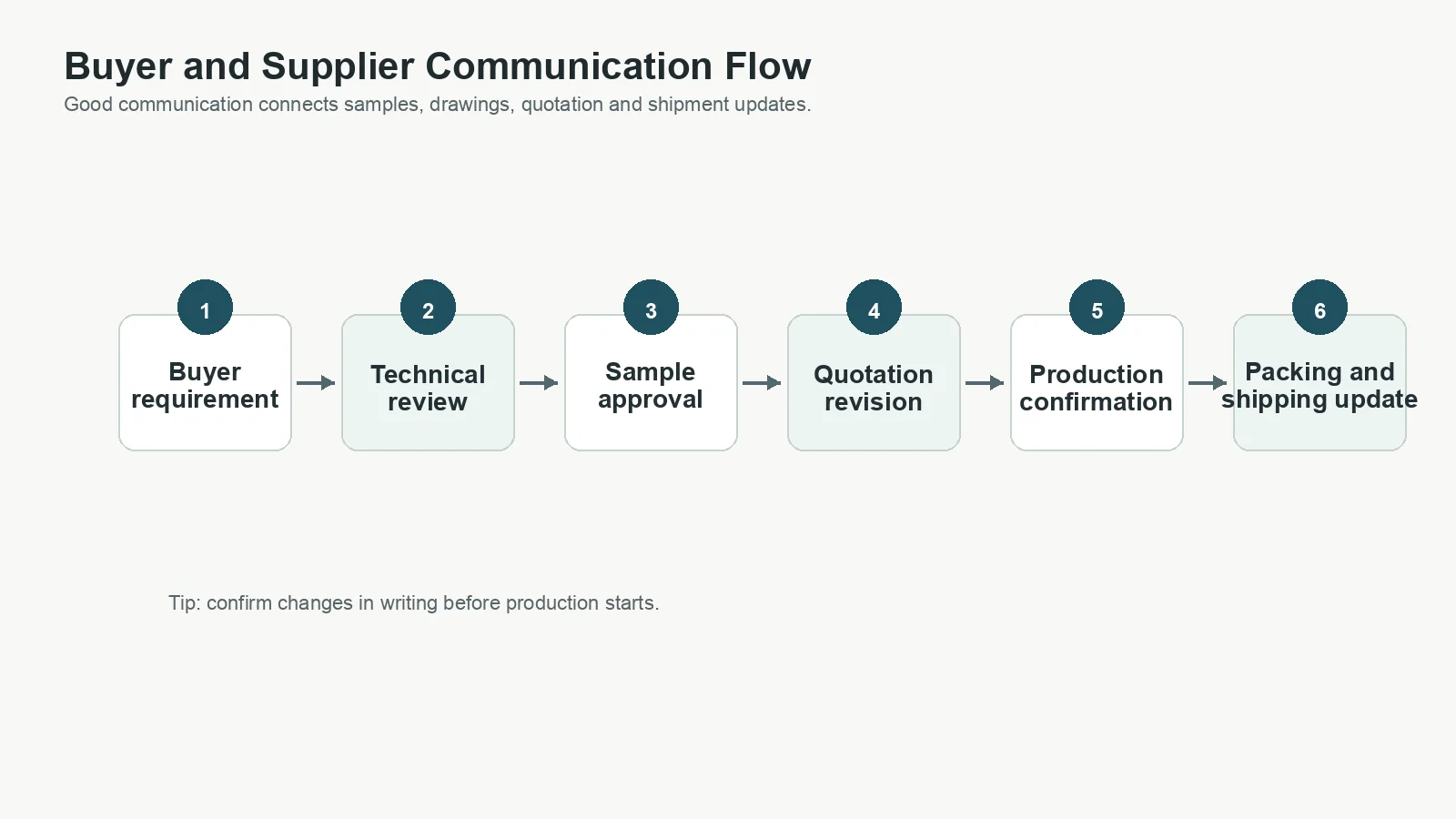
Sample approval is useful before bulk production.
Common sample types include:
- Color sample
- Coating sample
- Folded edge sample
- Perforated sample
- Wood grain sample
- Stone look sample
- Curved sample
- Installation detail sample
A color sample does not show the full panel structure.
A fabrication sample can help confirm edge return, folding detail, perforation, coating and installation concept.
Sample cost, sample size and freight should be confirmed with the supplier. For small trial orders, also review the aluminum panel MOQ, sample and export packing guide.
Step 5: Review the Quotation Scope
A quotation should be reviewed carefully.
Buyers should check whether the quotation includes:
- Product type
- Aluminum thickness
- Panel size
- Surface finish
- Color code or sample reference
- Edge return
- Stiffener
- Perforation or carving
- Curving or special shape
- Accessories
- Packing method
- Quantity
- Unit price
- Total price
- Production time estimate
- Trade term
- Destination port if freight is included
Two quotations may look different because one includes coating, stiffeners, wooden crates or accessories, while another does not.
Step 6: Confirm Shop Drawings and Panel Schedule
For custom aluminum panel projects, shop drawings are strongly recommended before production.
Shop drawings may include:
- Elevation layout
- Panel schedule
- Panel numbering
- Section detail
- Edge return detail
- Stiffener detail
- Fixing hole position
- Perforation or carving pattern
- Curved panel radius
- Ceiling or soffit layout
- Installation sequence
Panel schedule and numbering help connect production, packing and installation.
For large facade, soffit, ceiling and curved panel projects, production should follow approved drawings. The aluminum panel shop drawing guide explains what should be checked before fabrication.
Step 7: Confirm Order and Production Details
Before production starts, buyers should confirm:
- Final product specification
- Final drawings
- Approved samples
- Coating and color
- Quantity
- Thickness
- Edge return
- Stiffener
- Accessories
- Packing method
- Delivery term
- Payment term
- Production schedule
- Inspection requirement
Any change after production starts may affect cost, schedule and final result.
Step 8: Production and Inspection
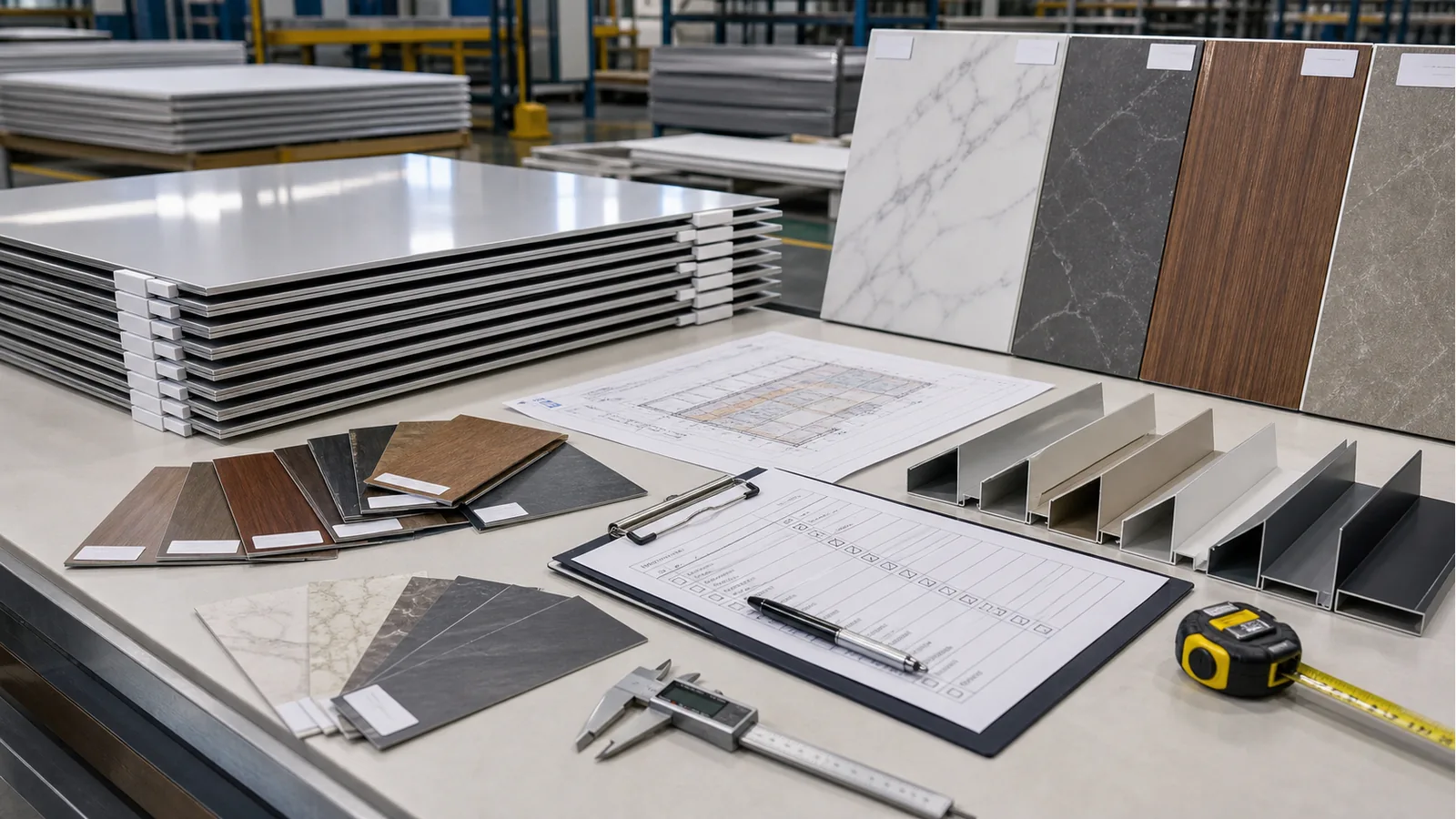
Inspection may include:
- Quantity check
- Panel size check
- Thickness check
- Surface finish check
- Color comparison with approved sample
- Edge return check
- Stiffener check
- Perforation or carving check
- Curved panel radius check
- Panel numbering check
- Packing check
For project-based aluminum panels, inspection should be connected with drawings, samples and order specifications.
If third-party inspection is required, buyers should arrange it before shipment.
Step 9: Export Packing
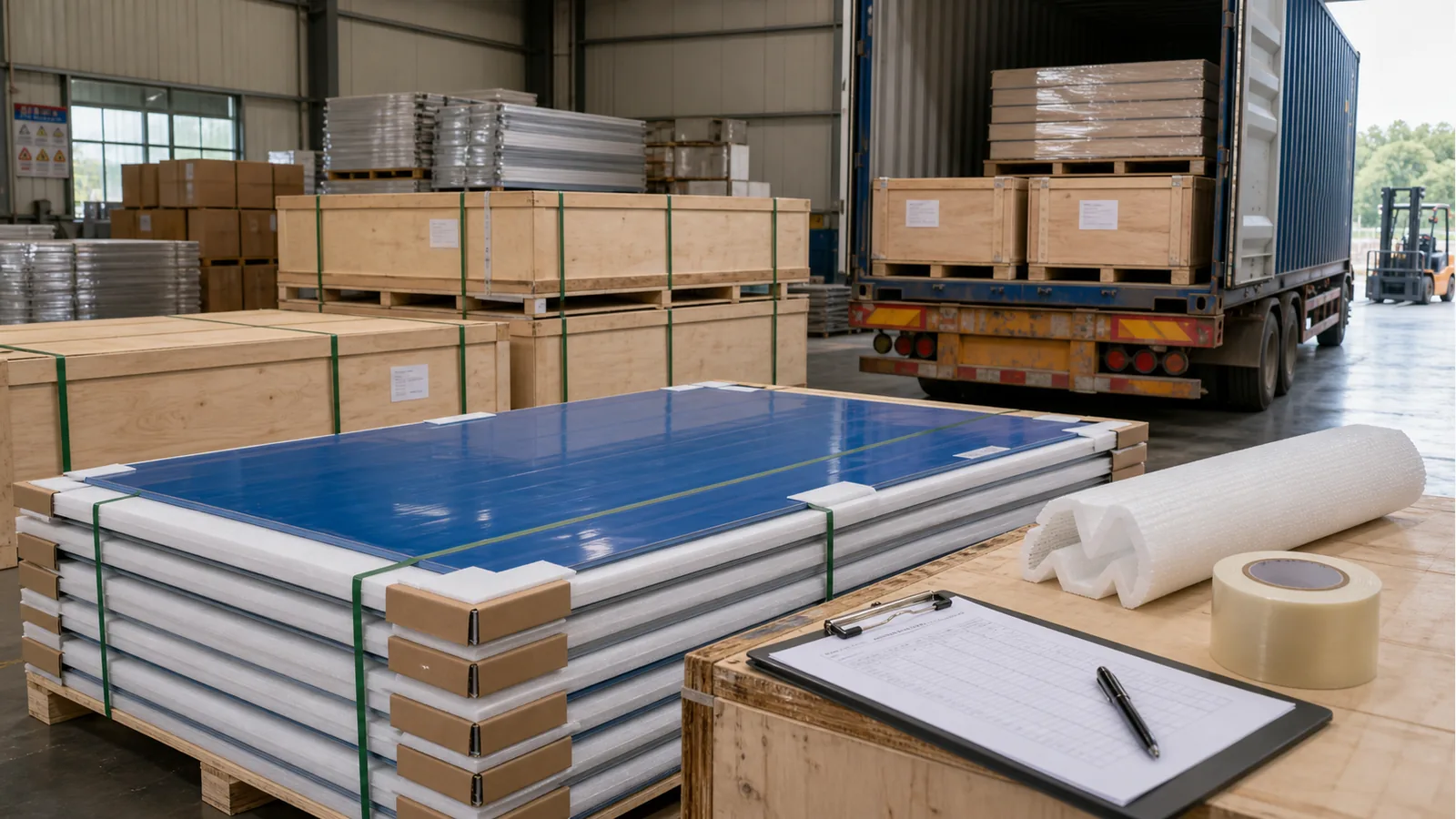
Export packing is important because aluminum panels may have coated surfaces, folded edges, corners, perforated patterns, curved shapes and decorative finishes.
Packing may include:
- Protective film
- Foam separation
- Corner protection
- Edge protection
- Wooden crate
- Pallet packing
- Panel numbering labels
- Packing list
- Crate number
- Container loading plan
Special-shaped panels should not be packed like simple flat sheets.
For wood grain, stone look and metallic finishes, surface protection and batch separation are especially important.
Step 10: Shipping and Documents
Buyers should confirm shipping details with supplier, freight forwarder and local customs broker.
Common information may include:
- Destination country
- Destination port
- Trade term such as EXW, FOB, CIF or other agreed terms
- Container loading plan
- Packing list
- Commercial invoice
- Bill of lading
- Certificate of origin if required
- Product documents if required by project or local market
Step 11: Receiving Goods and Installation Coordination
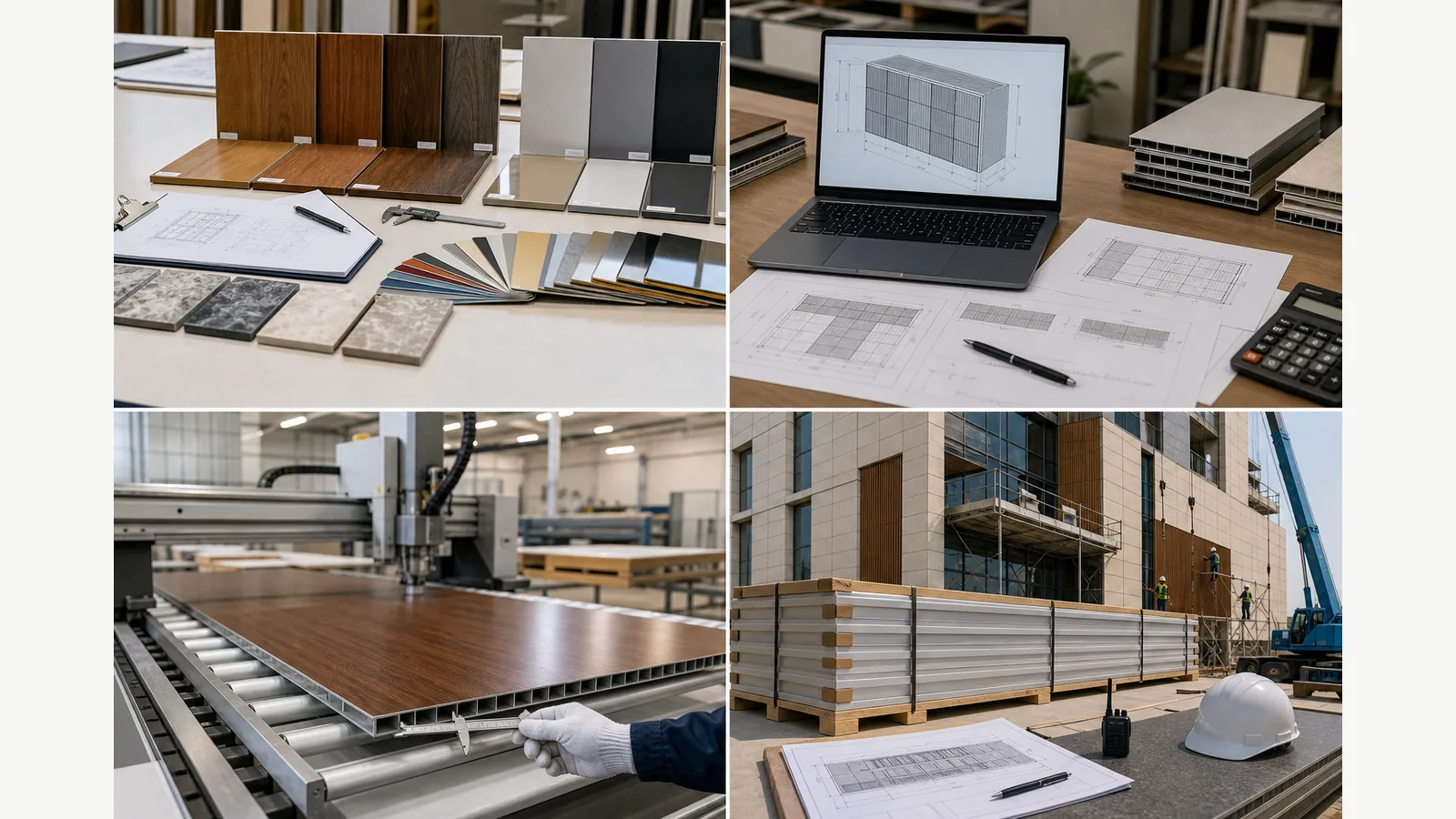
After goods arrive, buyers should check:
- Crate condition
- Packing list
- Panel numbers
- Surface protection
- Quantity
- Visible shipping damage
- Installation sequence
- Storage condition
- Protective film condition
- Accessories if included
For custom aluminum panels, installation teams should follow panel numbering and drawings.
Panels should be stored and handled carefully to avoid scratches, deformation or finish damage. The aluminum panel installation guide and the edge folding and stiffener guide can help buyers discuss site coordination earlier.
Common Import Mistakes
Common mistakes include:
- Asking only for square meter price
- Not sending drawings
- Comparing different coating systems
- Ignoring edge return and stiffeners
- Approving color only by phone photo
- Not requesting physical samples
- Not checking quotation scope
- Assuming accessories are included
- Ignoring export packing cost
- Forgetting destination port
- Not confirming Incoterms
- Not checking local import requirements
- Not labeling panels by installation sequence
- Treating custom panels like standard stock products
- Not arranging inspection before shipment
Most mistakes can be reduced by clear RFQ, sample approval, drawing confirmation, quotation review and packing communication.
Buyer Checklist Before Importing Aluminum Panels
Before placing an order, prepare:
- Product type
- Project application
- Drawings or reference photos
- Total quantity or area
- Panel size
- Thickness
- Surface finish
- Color sample or color code
- Edge return
- Stiffener requirement
- Perforation, carving or curving requirement
- Installation system or accessory requirement
- Sample requirement
- Packing requirement
- Destination country and port
- Trade term preference
- Inspection requirement
- Local import requirements
Clear information helps suppliers quote and produce more accurately.
Sample Inquiry Message
Buyers can use this message:
FAQ
Can I import aluminum panels from China for a small project?
Yes, but MOQ, unit price, sample cost and shipping cost depend on product type, finish, quantity, fabrication and supplier policy.
What information is needed before quotation?
Buyers should provide product type, drawings, quantity, size, thickness, surface finish, fabrication detail and destination port.
Should I order a sample first?
For custom finishes, new suppliers or project-based orders, sample approval is strongly recommended before bulk production.
Why do aluminum panel quotations vary so much?
Quotations vary because of thickness, coating, panel size, edge return, stiffeners, fabrication complexity, packing, quantity and shipping terms.
Can suppliers provide shop drawings?
Some suppliers can support shop drawing review or fabrication drawings, but the scope should be confirmed before order.
How are aluminum panels packed for export?
Common packing includes protective film, foam separation, corner protection, edge protection, wooden crates, pallet packing and panel numbering labels.
Who handles customs clearance?
Customs clearance depends on destination country and trade term. Buyers should confirm with local customs broker, freight forwarder and local regulations.
What is the best way to reduce sourcing risk?
Prepare clear RFQ information, confirm samples, review quotation scope, approve drawings, check packing method and arrange inspection if needed.
Related Aluminum Panel Guides
Before requesting a quotation, you may also want to review:
Request Aluminum Panel Import Support
If you are planning to import aluminum panels from China for a facade, ceiling, soffit, canopy, wall, column, screen or commercial interior project, please send your project details.
Please include:
- Product type
- Application
- Drawings or reference photos
- Quantity or estimated area
- Thickness
- Surface finish
- Sample requirement
- Packing requirement
- Destination country and port
We can help check suitable aluminum panel options, quotation scope, sample method, packing method and factory communication.